Wichtigste Erkenntnisse
- Thermischer Wirkungsgrad: 100% reines Kaschmir offers up to 8 times higher thermal insulation than regular wool at roughly one-fifth of the weight, making it the premier choice for luxury overcoat lines.
- Durability & Resilience: Wool blend fabrics (typically 20% to 30% wool or synthetic fibers mixed with cashmere) deliver enhanced crease resistance, higher pilling resistance (up to Klasse 4+), and greater structural tension for structured outerwear tailoring.
- Flexible Manufacturing: Top-tier Hersteller von Kaschmirmänteln allow flexible order quantities; specialized facilities can support initial OEM/ODM runs starting at a low Mindestbestellmenge von 50 Stück.
- Globale Compliance: Modern international procurement demands full transparency, requiring certifications such as OEKO-TEX Standard 100, SGS, CE, Und GRS (Globaler Recyclingstandard).
When developing a premium outerwear collection, brand owners and corporate buyers face a critical material selection milestone: deciding between 100% reines Kaschmir and engineered Kaschmir-Woll-Mischungen. Choosing the right fabric determines not only the garment’s tactile luxuriousness and warmth but also directly shapes retail pricing strategy, garment structure, and long-term customer satisfaction.
As established Hersteller von Kaschmirmänteln, understanding these subtle material mechanics is crucial for building a competitive brand catalog. A maßgeschneiderter Kaschmirmantel crafted from pure fiber delivers unmatched softness and prestige, whereas strategically blended fabrics provide functional durability and accessible luxury price points for commercial buyers worldwide.
Thermal Insulation and Fiber Architecture Breakdown
Understanding the physical structure of raw textile fibers is fundamental when working with premier Hersteller von Kaschmirmänteln to evaluate how finished outerwear retains warmth while maintaining elegance. Cashmere fiber originates from the fine undercoat of cashmere goats, featuring a hollow, air-trapping core that acts as a natural insulator. In contrast, standard wool fibers possess a solid core with higher density and weight, influencing both thermal conservation and fabric drape over time.
Selecting the right raw material for your maßgeschneiderter Kaschmirmantel involves analyzing three core physical attributes:
- Faserdurchmesser: Raw cashmere averages 15,5 Mikrometer oder feiner, creating an exceptionally smooth surface scale structure that eliminates skin irritation compared to coarser sheep wool (18.5 to 21.5 microns).
- Klammerlänge: High-grade raw fiber requires a minimum length of 34 mm oder länger, ensuring high tensile strength, minimal yarn breakage during spinning, and reduced surface fuzzing.
- Air Entrapment Capacity: The crimping index of pure cashmere creates thousands of micro-air pockets per square millimeter, building a natural thermal barrier that locks in body heat.
| Performance Metric | 100% Reines Kaschmir | Cashmere-Wool Blend |
| Thermal Insulation Ratio | 8x vs Standard Wool | 3x-5x vs Standard Wool |
| Average Fiber Micron | ≤ 15,5 μm | 18.5 μm – 21.5 μm |
| Durchschnittliche Faserlänge | ≥ 34 mm | 30 mm – 35 mm |
| Fabric Weight / Feel | Ultra-light & Loft | Medium to Heavyweight |
| Drape & Structure | Soft Fluid Drape | Crisp Structured Silhouette |
Laboratory evaluations confirm that 100% reines Kaschmir provides up to 8 times higher thermal performance than sheep wool, while weighing roughly one-fifth as much. Adding high-grade wool to cashmere creates a hybrid fabric structure that increases fabric tension, allowing Hersteller von Kaschmirmänteln to produce highly structured coats, crisp trench collars, and heavy double-breasted formal overcoats.
💡 Häufig gestellte Fragen
Q: Is a 100% cashmere coat warmer than a cashmere wool blend coat?
A: Yes, 100% reines Kaschmir provides superior warmth relative to weight. Cashmere fibers have a natural crimped structure with fine micro-air pockets that retain trapped body heat 8 times more effectively than conventional wool fibers, offering exceptional warmth without adding heavy physical weight to the finished overcoat.
Manufacturing Cost and MOQ Strategy Optimization
Navigating supply chain economics requires brand buyers to balance raw material expenses against market entry risks and capital allocation when negotiating with Hersteller von Kaschmirmänteln. Raw cashmere trades at premium rates on global commodity exchanges, which directly impacts FOB (Free on Board) unit manufacturing costs for luxury apparel lines.
B2B buyers designing a maßgeschneiderter Kaschmirmantel line can optimize sourcing budgets by evaluating key production parameters:
- Material Allocation Ratio: Formulating blends with 20% to 30% wool lowers fabric purchasing expenses by 30% to 50%, enabling brands to hit accessible retail price points without sacrificing hand-feel.
- Dye Vat Utilization: Standard mills demand large minimum fabric dye lots for pure cashmere runs, whereas flexible production facilities allow smaller custom dye batches to support niche releases.
- Inventory Velocity: Lower initial material expenditures free up brand working capital, accelerating seasonal restocks and lowering unsellable end-of-season inventory risks.
Working with agile Hersteller von Kaschmirmänteln enables boutique fashion houses and corporate procurement teams to launch new outerwear styles via a low Mindestbestellmenge von 50 Stück. This flexible minimum order volume allows brands to gauge market demand and run low-risk pilot sales before scaling into high-volume manufacturing runs.
💡 Häufig gestellte Fragen
Q: What minimum order quantity (MOQ) should B2B buyers expect for custom cashmere coats?
A: Traditional mass-production factories often mandate MOQs of 300 to 500 units per style. However, specialized Hersteller von Kaschmirmänteln equipped with flexible sampling lines offer an accessible Mindestbestellmenge von 50 Stück, enabling fashion brands to test custom silhouettes and premium fabrics with low initial inventory risk.
Durability and Garment Care Protocol Standards
Ensuring long-term garment integrity is critical for luxury brand reputation and post-purchase customer satisfaction. While a 100% pure maßgeschneiderter Kaschmirmantel delivers an unequaled hand-feel, its ultra-fine fiber scales demand careful wearing rotation and gentle maintenance to prevent friction-induced surface wear compared to blended alternatives.
When auditing samples from Hersteller von Kaschmirmänteln, garment durability and resilience rely on specific physical factors during daily wear:
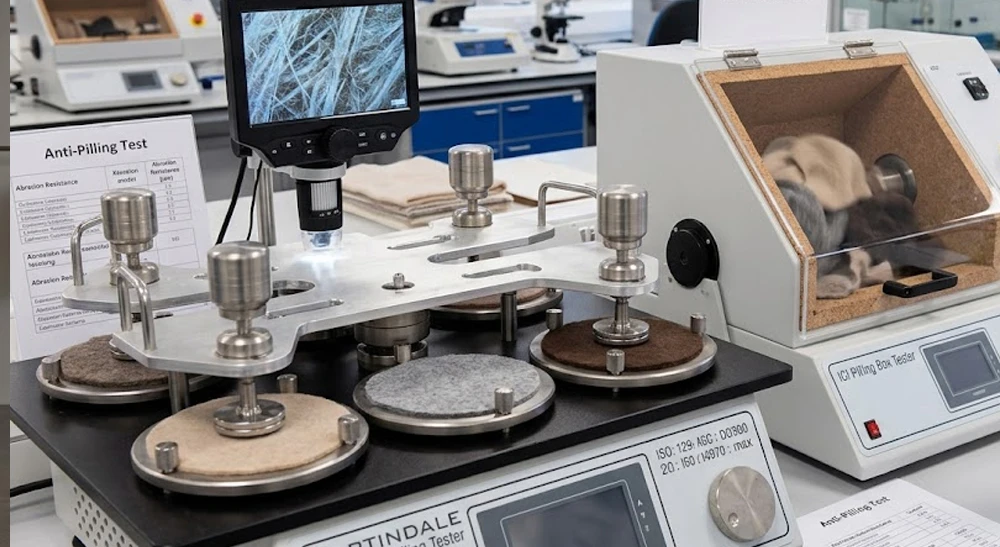
- Abrasion Endurance: Pure cashmere handles 10,000 to 15,000 rub cycles under standardized Martindale testing, whereas wool blends withstand 25,000+ rub cycles, making them ideal for heavy daily commuting.
- Pillingbeständigkeit: Blending long-staple sheep wool locks down loose surface cashmere fibers, elevating the fabric’s pilling resistance rating to Grade 4 or higher on the ASTM D3512 scale.
- Shape Retention: The natural elasticity of wool fibers helps blended overcoats retain pressed creases, resist travel wrinkling, and recover quickly from elbow flex strain.
Integrating engineered wool blends gives a maßgeschneiderter Kaschmirmantel the physical rigidity needed to endure frequent wear while retaining a polished appearance. Premium Hersteller von Kaschmirmänteln apply specialized anti-pilling finishing treatments to both pure cashmere and blended fabrics, extending garment service life across diverse retail market segments.
💡 Häufig gestellte Fragen
Q: How does blending wool with cashmere impact pilling resistance and overall durability?
A: Blending high-tensile wool with cashmere increases surface yarn stability, significantly lowering fiber shedding and friction-induced tangling. This structural reinforcement raises pilling resistance to Klasse 4+ on standard textile testing scales, extending the lifespan of daily-wear outerwear while keeping maintenance needs manageable.
Sustainable Sourcing and Global Certification Compliance
Modern international trade demands absolute transparency across apparel manufacturing supply chains, from raw pasture sourcing to chemical processing. European and North American customs authorities enforce strict compliance standards when brands import a maßgeschneiderter Kaschmirmantel collection from overseas factories.
International procurement from Hersteller von Kaschmirmänteln requires adherence to core global textile certifications:
- OEKO-TEX Standard 100: Verifies that woven fabrics, inner linings, and dyes are completely free from toxic heavy metals, AZO compounds, and hazardous chemical residues.
- SGS Material Inspection: Conducts microscopic fiber verification to confirm exact fabric composition percentages, protecting buyers against false fiber labeling.
- Globaler Recyclingstandard (GRS): Tracks and verifies recycled fiber content for eco-friendly wool and sustainable cashmere blend outerwear collections.
- CE Conformity: Ensures manufactured apparel adheres to European Union health, safety, and consumer protection requirements.
Partnering with certified Hersteller von Kaschmirmänteln ensures that every shipment meets international trade standards without regulatory delays. Verified sustainability credentials protect brand integrity and build consumer trust in premium retail markets.
💡 Häufig gestellte Fragen
Q: Which international certifications are required when importing custom cashmere overcoats?
A: Key international standards include OEKO-TEX Standard 100 for chemical and eco-safety, SGS certification for accurate material ratio verification, and GRS (Globaler Recyclingstandard) for sustainable fiber lines. These credentials ensure smooth customs processing and build brand authority with retail consumers.

Custom Manufacturing Solutions for Premium Brands
Bringing 33 years of specialized manufacturing heritage to the global textile industry, Jingshang serves as a premier OEM/ODM factory for brands seeking high-end Hersteller von Kaschmirmänteln. We source raw cashmere directly from Innere Mongolei, Auswahl von Premiumfasern mit einer durchschnittlichen Feinheit unter 15,5 Mikrometer und Klammerlängen von mehr als 34 mm um außergewöhnliche Weichheit und Wärmedämmung zu gewährleisten.
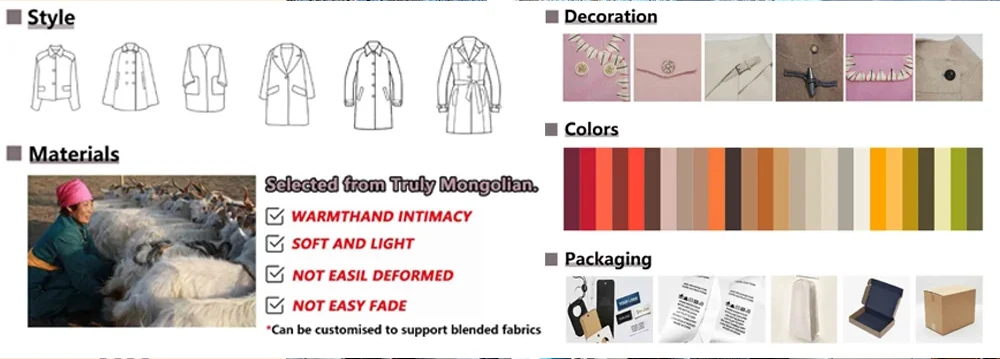
Jingshang bietet umfassende End-to-End-Anpassung für jedes Produkt maßgeschneiderter Kaschmirmantel über fünf zentrale Fertigungsdimensionen hinweg:
- Materialauswahl: Volle Flexibilität bei der Produktion 100% reines Kaschmir oder maßgeschneiderte Kaschmir-Wollmischungen basierend auf Zielpreisen und klimatischen Anforderungen.
- Maßgeschneiderte Designs & MusterZugang zu über 1.000 klassische Mantelmuster oder die Entwicklung komplett individueller Schnittmuster anhand technischer Designskizzen.
- Markeneigenes ZubehörVollständige Integration von individuell gewebten Nackenetiketten, gravierten Knöpfen, Seidenfutter und Marken-Hangtags.
- Präzise Farbabstimmung: Individuelle Stofffärbung mit exakter Pantone-Farbanpassung und hoher Farbechtheit.
- Flexibel, niedrige Mindestbestellmenge: Zugängliche Produktionsläufe ab einem Mindestbestellmenge von 50 Stück zur Unterstützung von Kapsel-Releases und Private-Label-Tests.
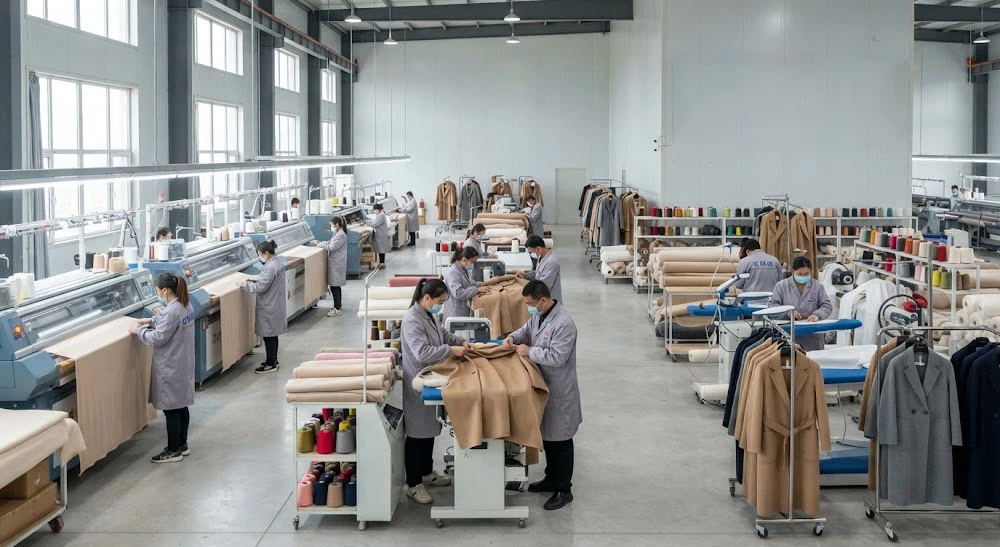
Betrieb von einem modernen 10.000 Quadratmeter große Fabrikhalle ausgestattet mit 80 spezialisierte Textilmaschinen und besetzt mit über 100 Meisterhandwerker, Jingshang vereint hohe Produktionskapazität mit strenger Qualitätskontrolle. Das Unternehmen zählt zu den führenden Herstellern von Produktionsdienstleistungen. Hersteller von Kaschmirmänteln und unterstützt von CE-, SGS-, OEKO-TEX Standard 100- und GRS-Zertifizierungen, Unsere Einrichtung bietet zuverlässige Handwerkskunst, wettbewerbsfähige Preise direkt ab Werk und schnelle Prototypenentwicklung innerhalb 7 bis 10 Werktage.
💡 Häufig gestellte Fragen
F: Welche kundenspezifischen OEM/ODM-Dienstleistungen bietet Jingshang für Kaschmirmäntel unter Eigenmarken an?
A: Jingshang bietet umfassende OEM/ODM-Anpassungsdienstleistungen aus einer Hand. Kunden können ihre Produkte vollständig individualisieren. Stoffmischungszusammensetzungen, Pantone-konforme Farbstoffe, Markenetiketten und Logos, Futtermaterialien, Und Kleidungssilhouetten. Unsere Musterlinie liefert Prototypen von Kleidungsstücken anhand technischer Zeichnungen innerhalb von 7 bis 10 Werktage.
Arbeiten Sie mit einem verifizierten Hersteller zusammen, der von folgenden Institutionen unterstützt wird: 33 Jahre Erfahrung mit Kaschmir aus der Inneren Mongolei. Kontaktieren Sie noch heute das Ingenieurteam von Jingshang, um ein kostenloses Materialmusterbuch zu erhalten, technische Datenblätter einzusehen oder ein individuelles Musterangebot ab einem bestimmten Preis anzufordern. Mindestbestellmenge von 50 Stück.
| Jetzt anfragen | E-Mail:info@hwcashmere.com | WhatsApp:+8613932982033 |
Auswahl zwischen 100% reines Kaschmir and engineered Wollmischungen Das hängt von Ihrer Zielgruppenpositionierung, dem Verkaufspreis und den gewünschten funktionalen Eigenschaften ab. Reines Kaschmir bietet unvergleichlichen Luxus und federleichte Wärmeleistung, während Kaschmir-Woll-Mischungen für Formbeständigkeit und attraktive Preise sorgen. Die Zusammenarbeit mit erfahrenen Experten ist dabei entscheidend. Hersteller von Kaschmirmänteln wie Jingshang stellt sicher, dass Ihre Vision für ein Premiumprodukt maßgeschneiderter Kaschmirmantel Die Produktlinie wird durch zertifizierte nachhaltige Materialien, flexible Produktionsskalierung und präzise Fertigungsstandards realisiert.