
Conclusiones clave
- Significant shrinkage rates in cashmere fabrics: Under standard warm water washing below 30°C, the initial shrinkage rate of 100% cachemir puro is typically 5%–15%. If washed improperly or exposed to high temperatures, cumulative shrinkage can reach 20%+. In contrast, for cashmere and acrylic blends, the shrinkage risk decreases significantly as the cashmere proportion drops.
- Analysis of physical shrinkage mechanisms: Cashmere shrinkage is primarily caused by natural cuticle scales on the surface of cashmere fibers (with a fiber diameter of only 14–16 microns) that undergo felting and interlock under moisture, high temperatures (exceeding 35°C), and mechanical agitation, creating irreversible dimensional shrinkage.
- Standard operating procedure for scientific washing: It is recommended to use cool water at 25°C–30°C y un pH-neutral dedicated cashmere detergent, hand wash gently, and strictly avoid wringing, scrubbing, tumble drying, or hanging to dry. After washing, press with a dry towel to absorb excess moisture and lay flat to dry in the shade.
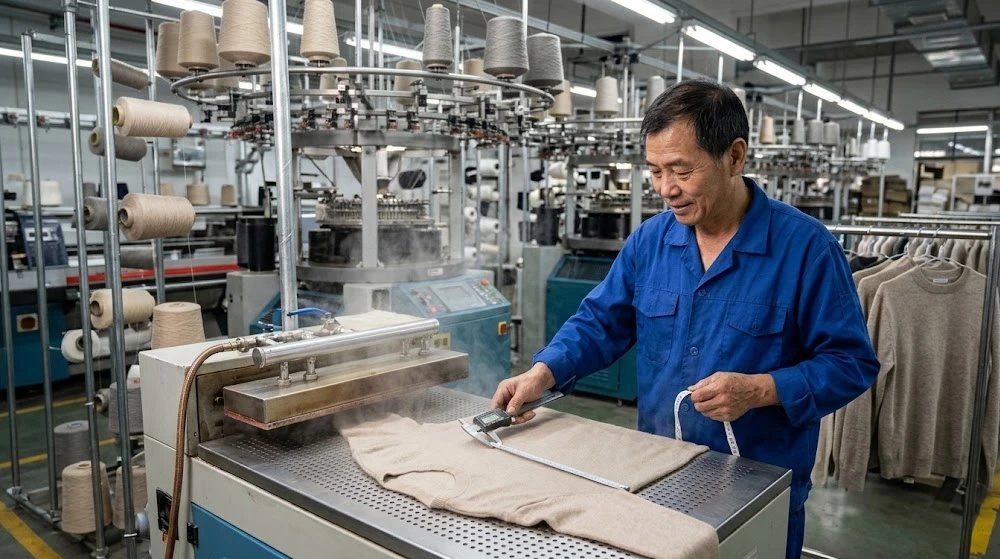
- Factory-level shrinkage control processes: Brand owners and buyers can strictly control finished bulk garment shrinkage rates within acceptable limits through factory-level solutions such as choosing anti-shrink treated cashmere yarns, pre-shrinking steam finishing, relaxation setting, and building shrinkage allowances into pattern making.
Have you ever washed a cashmere garment only to find that it noticeably shrank? As a premier proveedor de suéteres de cachemira with 33 years of OEM/ODM expertise, Jingshang understands that dimensional stability and wash performance are critical concerns for fashion brands, wholesalers, and consumers alike. Shrinkage depends on fiber diameter, yarn structure, finishing processes, and washing techniques. While synthetic materials offer dimensional stability, natural cashmere requires careful care to prevent irreversible felting. This comprehensive guide explores shrinkage variations, fiber mechanisms, scientific washing standards, and how our factory produces premium Suéteres de cachemir al por mayor with precise shrinkage control.
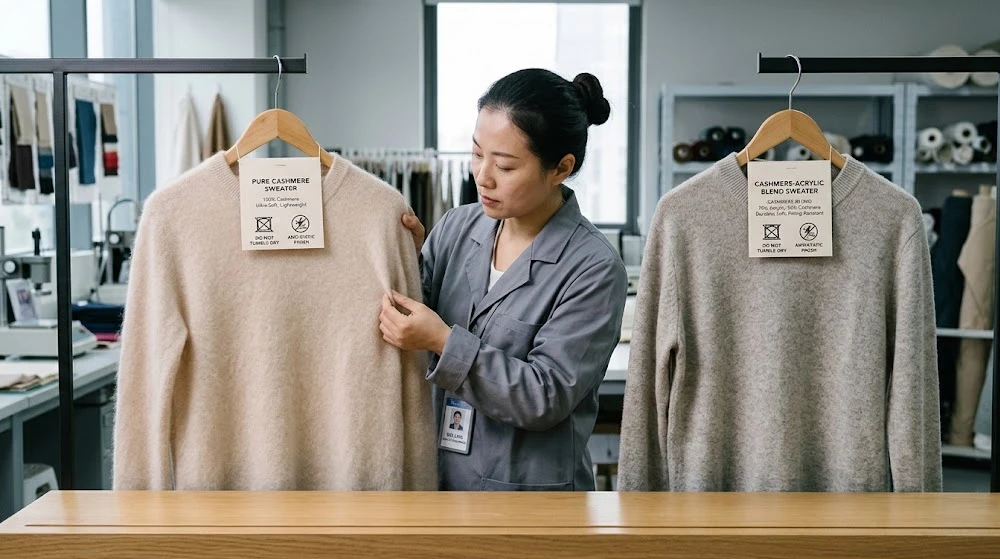
Cashmere & Blend Fabric Shrinkage Rate Comparison
There are huge differences in dimensional stability during washing among cashmere knitwear with different material compositions. As a professional proveedor de suéteres de cachemira con 33 años de historia, Jingshang leverages rigorous screening of premium Inner Mongolia raw materials and precise knitting control to conduct strict wash tests on fabrics with various blend ratios in its laboratory. The table below, based on industry standards and Jingshang bulk inspection data under gentle washing conditions below 30°C, compares shrinkage rates and risk levels across different cashmere fabrics:
| Fabric Type | Initial Wash Shrinkage | Cumulative Shrinkage | Risk Level | Main Causes of Shrinkage |
| 100% Cachemira pura | 5–15% | Up to 20%+ | Muy alto | Scale structure on ultra-fine fibers; heat, moisture, and friction cause felting |
| High-Ratio Cashmere Blends (Cashmere ≥50%) | 3–8% | 8–15% | Alto | High cashmere ratio increases the risk of natural protein fiber scale interlocking |
| Low-Ratio Cashmere Blends (20% Cashmere/80% Acrylic) | 2–5% | 4–8% | Medium | High acrylic ratio enhances dimensional stability, but careful washing is still needed |
| Trace Cashmere Blends (10% Cashmere/90% Acrylic) | 1–2% | 2–3% | Bajo | Extremely low acrylic moisture absorption significantly reduces overall shrinkage risk |
For garments containing over 30% cashmere, special attention must be paid to the care label instructions. When the cashmere content exceeds 50%, gentle hand washing or professional dry cleaning is recommended as a priority. For mass-market e-commerce targeting cost-effectiveness and easy care, the 20% cashmere + 80% acrylic blended yarn developed by Jingshang perfectly retains the soft and fluffy feel of Inner Mongolia cashmere while stably controlling bulk product shrinkage rates at a lower level of 2–5%.
💡 Preguntas frecuentes
Q: Do cashmere sweaters shrink most severely during the first wash?
A: Yes. Dimensional contraction in pure cashmere and cashmere blend knitwear occurs primarily during the first few washes. Once internal stress in the fabric is fully released, subsequent dimensional shrinkage tends to level off. However, if excessively hot water or aggressive tumble drying is used, severe secondary felting shrinkage can still be triggered.
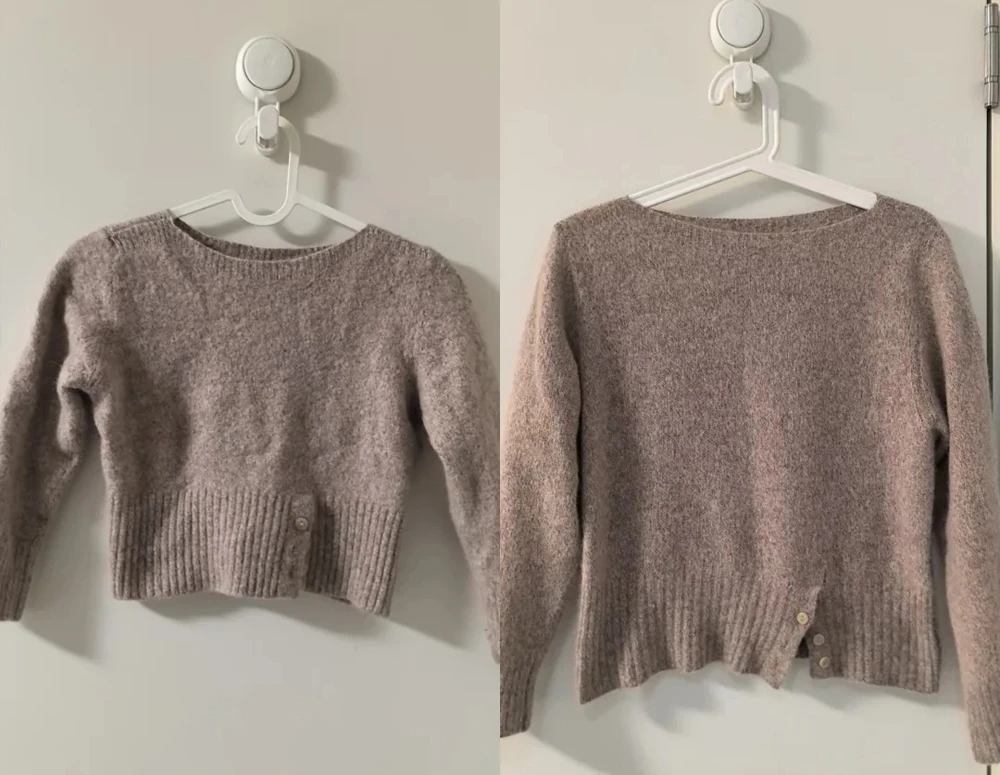
Analysis of Cashmere Fiber Microscopic Shrinkage Mechanism
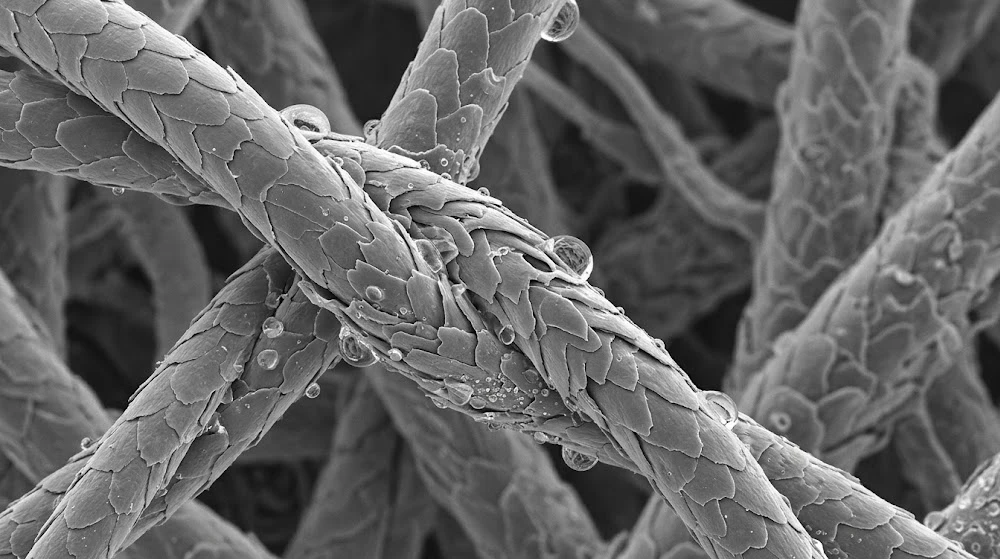
The fundamental reason why cashmere is prone to shrinkage lies in its unique microscopic animal protein fiber structure. Jingshang, an experienced proveedor de suéteres de cachemira, strictly selects natural high-quality cashmere from Inner Mongolia, featuring an average fiber diameter of only 14–16 microns, far finer than ordinary fibers, with a layer of directional cuticle scales covering its surface. When cashmere is soaked in water and subjected to heat or mechanical agitation, the fiber scales open up and interlock like barbs, a physical phenomenon known as felting.
[Water Temp > 35°C / Aggressive Rubbing] → [Cashmere Cuticle Scales Open and Interlock Lock-Tight] → [Fabric Density Increases, Becoming Hard and Thick] → [Irreversible Permanent Shrinkage]
Analyzing this microscopic physical change yields the following key points:
- Ultra-fine fibers easily tangle: The delicate diameter of 14–16 microns gives Inner Mongolia cashmere an extremely high surface area and flexibility; once scales interlock, they are exceedingly difficult to disentangle.
- Extreme dimension contraction: Severe felting shrinkage is generally irreversible. For example, a size M cashmere sweater with a chest circumference of 92 cm that undergoes 10% shrinkage will shrink directly to 83 cm (equivalent to size XS), making the garment virtually unwearable.
- External environmental conditions trigger damage: Water temperatures above 35°C drastically increase the risk of scale opening; machine agitation and hand wringing accelerate scale locking; harsh alkaline detergents break down protein structures, making the fabric hand feel rough.
A deep understanding of the cashmere fiber felting mechanism forms the foundation for scientific care and industrial anti-shrinkage. Relying on 33 años of knitwear manufacturing experience, Jingshang controls fiber characteristics from the source, effectively balancing fiber loftiness with physical stability during the knitting process to ensure garments maintain ultimate softness while minimizing shrinkage risks to the greatest extent possible.
💡 Preguntas frecuentes
Q: Is it possible for a shrunken cashmere sweater to restore to its original size?
A: Minor relaxation shrinkage can be reshaped and stretched by soaking in warm water to soften the fibers followed by steam ironing. However, if severe felting shrinkage occurs due to high temperatures and aggressive rubbing, the fiber scales become tightly locked together, making it nearly impossible to fully restore original dimensions and natural softness.
33-Year Factory Cashmere Sweater Scientific Washing Guide
To prevent premium Suéteres de cachemir al por mayor from severe shrinkage or distortion, establishing a standardized washing process is vital. Jingshang brings 33 años of cashmere manufacturing experience, featuring a specialized quality inspection and washing laboratory within its 10.000 metros cuadrados modern factory. Staffed by over 100 experienced technical employees and equipped with 80 precision knitting machines, Jingshang is fully certified by CE, SGS, Oeko-Tex y GRS, summarizing a standard operating procedure (SOP) for global buyers and end consumers.
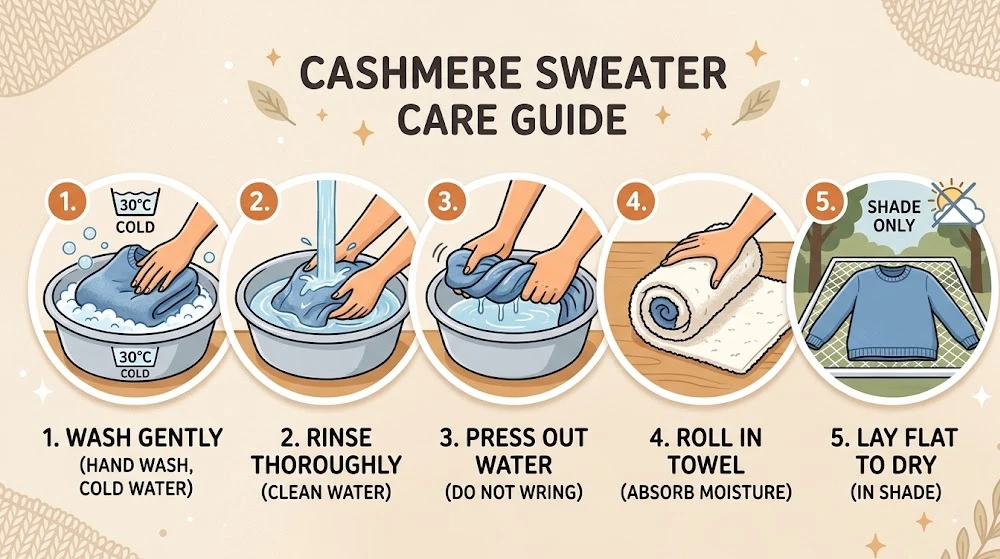
In daily maintenance and laboratory testing, we recommend following these specific five-step washing standards:
- Step 1: Preparation: Use cool water at 25°C–30°C mixed with a pH-neutral dedicated cashmere detergent. Strictly avoid strong alkaline household laundry powders to protect the natural protein fiber structure from the source.
- Step 2: Gentle Hand Wash: Limit soaking time to within 10–15 minutes. Gently press down with palms to remove dirt, and never scrub, wring out, or twist forcefully to avoid aggressive mechanical friction.
- Step 3: Thorough Rinsing: Rinse repeatedly with clean water until no detergent residue remains. Maintain consistent water temperatures throughout washing to prevent sudden fiber contraction caused by drastic temperature fluctuations.
- Step 4: Water Removal & Reshaping: Wrap the garment in a dry towel after washing and press gently to absorb excess water. Never twist forcefully. After absorbing moisture, gently reshape the sweater flat back to its standard pattern dimensions.
- Step 5: Lay Flat to Dry: Lay the reshaped cashmere sweater flat on a dedicated drying net in the shade. Hanging to dry is strictly forbidden to prevent stretching and distortion, and tumble drying under high heat is absolutely prohibited.
Following the above scientific washing standards can extend the service life of cashmere garments to the maximum extent. High-quality cashmere sweaters produced by Jingshang undergo industrial heat-setting and anti-shrink pre-treatments; as long as washing water temperatures and mechanical force are properly controlled, cashmere sweaters will maintain their original fluffy softness and excellent dimensional stability over the long term.
💡 Preguntas frecuentes
Q: Can the “Wool/Delicate” cycle on a washing machine completely replace hand washing?
A: For cashmere yarns treated with professional anti-shrink processes, using a correct delicate cycle is relatively safe. However, for high-purity natural cashmere sweaters without special anti-shrink treatments, gentle hand washing or professional dry cleaning remains the safest choice.
Maintenance Comparison of Cashmere Blends & Synthetic Fibers
In addition to pure cashmere, blending cashmere with synthetic fibers like acrylic is also a common solution when producing high-performance Suéteres de cachemir al por mayor. Jingshang operates 80 high-precision automated knitting machines capable of precisely regulating cashmere and synthetic fiber knitting density according to global client customization needs, offering diversified products that balance cost-effectiveness with anti-shrink performance.
When coordinating blends and maintaining different material compositions, pay special attention to the following characteristics:
- Enhanced dimensional stability: Acrylic has a moisture absorption rate of only 1–2% and barely swells in water. Blending it with cashmere significantly reduces washing shrinkage rates (typically only 1–3%).
- Thermal sensitivity and static: Acrylic exhibits thermoplastic properties and is extremely sensitive to high temperatures, which cause permanent softening and deformation. High-temperature tumble drying must be avoided, and fabric softeners can be added during washing to reduce static build-up.
- Graduated washing methods: The higher the cashmere proportion, the stricter the requirements for water temperature and mechanical agitation. Choose the most appropriate care method based on fiber blend ratios.
| Cashmere Blend Composition Ratio | Shrinkage Risk Level | Recommended Washing & Care Method |
| 100% Cachemira pura | Very High (5%–15%) | Cool water hand wash or professional dry cleaning recommended; strictly control water temp and friction |
| 50% Cashmere Blend | Medium-High (3%–8%) | Cool water gentle hand wash recommended, or use a specialized machine delicate cycle |
| 20% Cashmere Blend | Medium-Low (2%–5%) | Gentle machine wash below 30°C acceptable; lay flat in shade to dry after washing |
Selecting a reasonable blend ratio maintains an excellent hand feel while lowering care difficulty. Jingshang supports full OEM/ODM custom services, providing tailored R&D support for materials, colors, patterns, and specifications according to the target market needs of brand clients.
💡 Preguntas frecuentes
Q: Can dry cleaning 100% prevent cashmere sweaters from shrinking?
A: Dry cleaning uses organic solvents instead of water, preventing cashmere fiber scales from opening up and thus effectively avoiding felting shrinkage caused by moisture. However, if drying temperatures during the dry cleaning process are not properly controlled, thermal deformation can still occur on synthetic fibers within blends.
Core Anti-Shrinkage Processes for Bulk Custom Cashmere Sweaters
For global buyers seeking a reliable proveedor de suéteres de cachemira, controlling shrinkage rates at the production source is the core strategy for reducing customer complaints and building long-term brand reputation. As a leading cashmere garment manufacturer with over 100 professional employees, Jingshang has established a stringent shrinkage control system across the entire manufacturing workflow.
[Anti-Shrink Yarn Sourcing] → [Cashmere Pre-Shrinking] → [Steam Blocking & Pre-Shrinking] → [Pattern Shrinkage Allowance]
The four core manufacturing stages for factory shrinkage control in cashmere sweaters include:
- Anti-shrink yarn sourcing: Select cashmere yarns treated with specialized eco-friendly anti-shrink finishes to reduce fiber scale interlocking and lower wash shrinkage from the source.
- Garment pre-shrinking treatment: Before finished garments leave the factory, utilize industrial washing and relaxation pre-shrinking processes to release yarn knitting stress in advance.
- Precision steam blocking: Rely on Jingshang’s advanced industrial steam setting equipment to heat-set garment dimensions, guaranteeing specification consistency across bulk deliveries.
- Pattern grading shrinkage allowance: Senior pattern makers at Jingshang precisely reserve shrinkage allowances during pattern development based on lab-tested shrinkage rates for specific cashmere yarns (e.g., 3%–5%), ensuring garments restore to target dimensions after washing.
Through these four rigorous factory-level anti-shrinkage processes, Jingshang strictly controls mass production garment size tolerances within ±1 cm standards. Our full product line has obtained CE, SGS, Oeko-Tex y GRS international authoritative certifications, providing worry-free delivery guarantees for high-end brands and wholesalers globally.
💡 Preguntas frecuentes
Q: How can B2B buyers ensure dimensional tolerances when placing bulk custom cashmere sweater orders?
A: High-quality manufacturers perform constant-temperature moisture regain treatments on cashmere yarns prior to knitting, followed by precise heat-setting on finishing machines after garment assembly, strictly controlling bulk dimension tolerances within ±1 cm.
Ready to elevate your product line with high-quality, shrink-resistant knitwear? Contact Jingshang today to request free samples and custom OEM/ODM wholesale quotes!
| Consulta ahora | Correo electrónico:info@hwcashmere.com | WhatsApp:+8613932982033 |
As a trusted proveedor de suéteres de cachemira and premier manufacturer of high-end Suéteres de cachemir al por mayor with 33 years of experience, Jingshang combines Inner Mongolia cashmere raw materials with advanced anti-shrinkage manufacturing technologies. Operating a 10.000 metros cuadrados instalación con 80 precision machines and CE, SGS, Oeko-Tex y GRS certifications, we offer custom solutions across materials, colors, patterns, and logos to help B2B buyers build successful knitwear collections worldwide.