Table of contents
Understanding Cashmere Fiber Quality
- Fiber Source: High-quality cashmere mainly comes from Inner Mongolia, Mongolia, and the cold highland regions of northwest China. The cold climate stimulates goats to grow dense, soft undercoat fibers, which provide excellent warmth and softness, forming the basis of premium cashmere yarn.
- Fiber Length: Cashmere fibers are usually 28–34 mm long. Longer fibers reduce the risk of yarn breakage, enhance durability and luster, and facilitate smoother, more uniform yarn during spinning, ensuring the premium feel of finished sweaters and scarves.
- Fiber Diameter: Fiber diameter generally ranges between 14–19 microns. The finer the fiber, the softer the yarn, offering superior comfort suitable for high-end sweaters, scarves, and other close-to-skin accessories. Coarser fibers can affect smoothness and comfort, so strict grading is essential.
- Color and Luster: Natural cashmere has a soft tone, making it easier to dye. Even fiber color reduces post-dyeing variations, ensuring consistent appearance and luster in finished yarn. High-quality manufacturers often optimize color uniformity through grading and blending techniques.
Cashmere Processing Workflow
The process from raw cashmere to finished yarn is both scientific and artistic. Professional cashmere yarn manufacturer strictly controls quality at every step to ensure high-standard yarn.
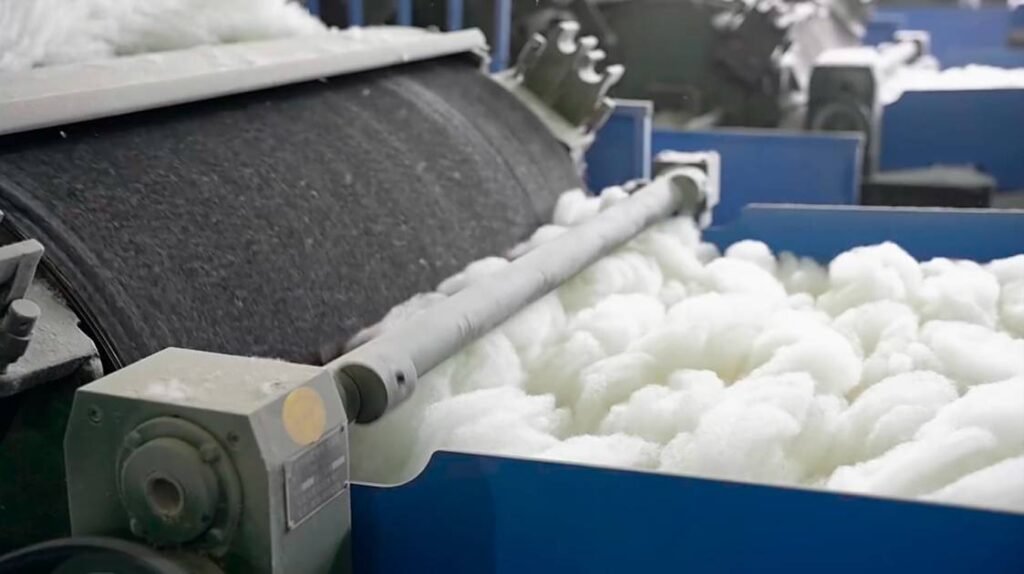
- Raw Material Cleaning and Combing: After collection, cashmere may contain impurities such as small grass, dirt, and short fibers. Mechanical combing removes these impurities and aligns fibers evenly. This step ensures smooth spinning and directly impacts yarn softness and luster.

- Fiber Grading and Blending: To ensure uniformity and stability, fibers are graded by length, diameter, and color. Different grades are scientifically blended to form a stable yarn foundation. Controlling the ratio of long to short fibers significantly affects the feel and pilling resistance of the yarn.

- Spinning Methods: Common spinning methods include ring spinning and air-jet spinning. Ring spinning produces tighter, more durable yarn, while air-jet spinning yields lighter, softer yarn suitable for fine cashmere. Professional cashmere yarn manufacturer selects the most appropriate spinning technique based on product needs to balance strength and softness.

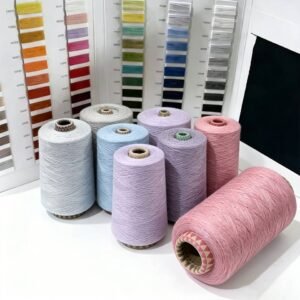
- Dyeing and Finishing: Dyeing requires vibrant color, environmental safety, and colorfastness. Modern cashmere processing uses eco-friendly dyes, and finishing improves yarn hand-feel and luster. Tension control, humidity management, and temperature adjustment during finishing are key to ensuring soft, smooth yarn.

Each operation reflects the experience and technical accumulation of professional manufacturers. Designers and brands can make informed decisions when selecting cashmere yarn by understanding these process steps.
Cashmere Yarn Quality Control and Testing
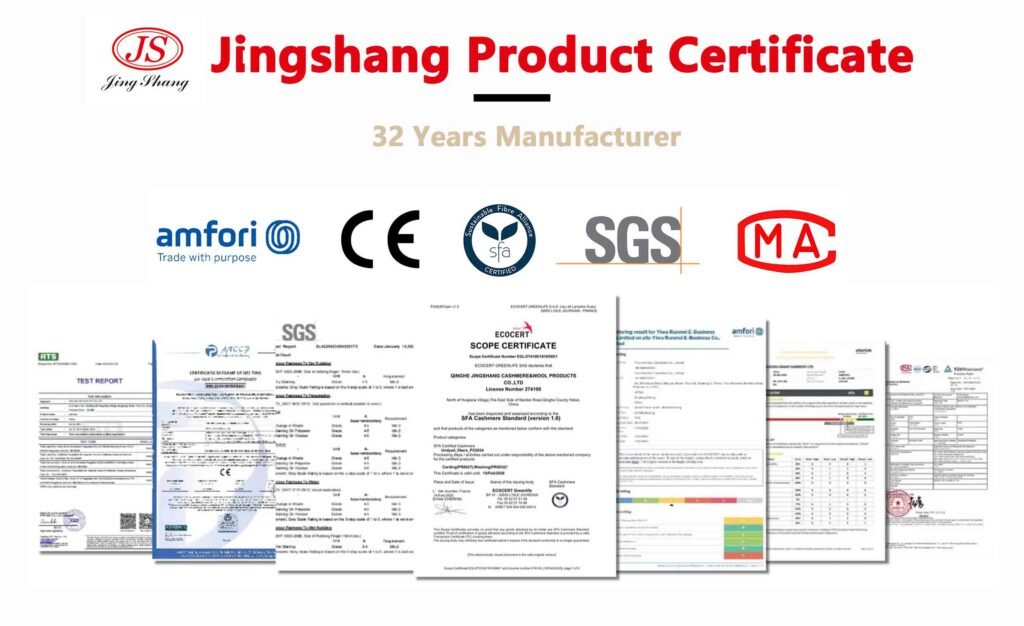
- Quality control is essential in cashmere yarn manufacturing, directly affecting market competitiveness. Professional cashmere yarn manufacturer implements strict inspections at each stage to ensure yarn meets international standards.
- Common Quality Metrics: Fiber length and diameter determine yarn softness and luster. Yarn strength ensures garment durability. Colorfastness prevents dye fading, and pilling resistance affects the longevity of sweaters and scarves.
- Instruments and Equipment: Advanced testing equipment includes fiber measuring devices, tensile testers, and colorimeters. These instruments provide scientific data to support production decisions.
- International Standards and References: Standards such as ISO 1773 (fiber length measurement) and ASTM D1577 (fiber fineness measurement) provide authoritative guidance. Monitoring these data ensures consistency in feel, softness, and strength across batches.
Jingshang Advantages and Reliability: Choosing a Professional Cashmere Partner
Jingshang is a professional cashmere manufacturer and cashmere yarn manufacturer with 32 years of experience, covering the entire chain from raw material sourcing to yarn production and knitted garments. Partnering with Jingshang provides clients with high-quality, reliable cashmere products.
- Extensive Industry Experience: Since its establishment in 1993, Jingshang has focused on cashmere yarn, sweaters, scarves, and accessories, accumulating over 32 years of experience. Its expertise spans raw material selection, dyeing, spinning, and knitting processes.
- Premium Raw Material Assurance: Top-quality raw cashmere comes from the highlands of Inner Mongolia. The cold climate produces soft, fine, and warm fibers. Rigorous material selection and grading ensure that every batch of yarn and knitted product maintains superior hand-feel and stable quality.
- Advanced Production Techniques: Jingshang applies precise dyeing techniques to produce natural, vibrant, and colorfast yarn. Through combing, fine spinning, and compact spinning, yarn structure remains uniform and dense, with minimal fuzz, smooth weaving, and soft, durable results suitable for high-end designs.
- Strict Quality Control System: The production process includes fiber fineness tests, moisture and oil monitoring, color difference inspections, and tensile and abrasion testing. Every shipment of cashmere yarn comes with inspection records, guaranteeing stable and reliable quality.
- Strong Customization and Technical Support: Jingshang provides comprehensive OEM/ODM services, supporting custom yarn counts, color development, blend ratio adjustments, and exclusive product development. A skilled technical team ensures clients can quickly launch high-end cashmere products that meet market demand.
- Complete Supply Chain Advantage: As a manufacturer integrating raw materials, yarn, and finished knitted garments, Jingshang effectively manages the entire production process, reducing uncertainties and delivering high-quality yarn and finished products seamlessly.
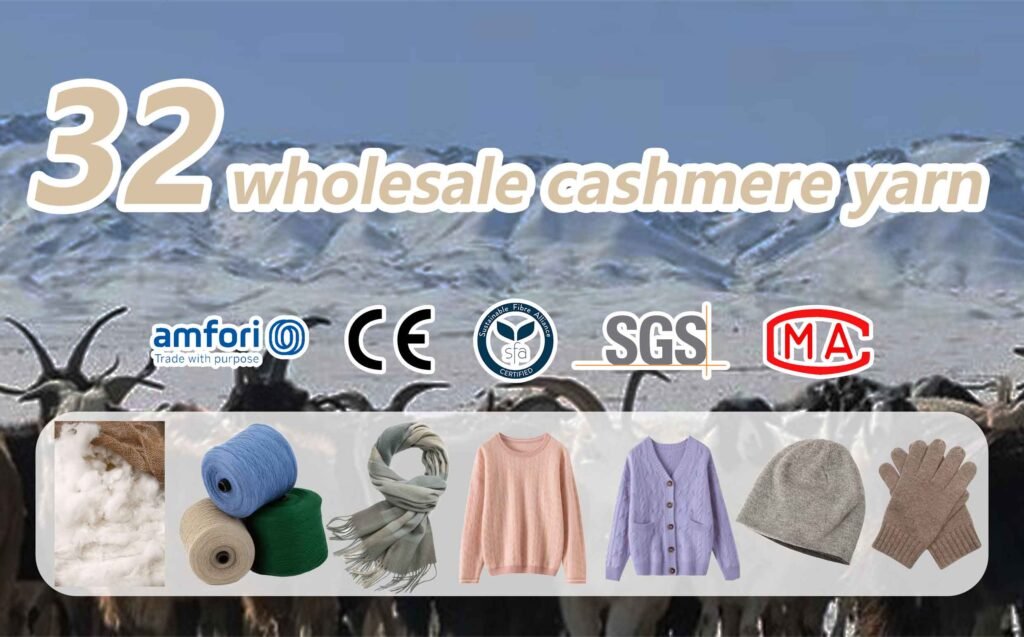
Applications of High-Quality Cashmere and Cashmere Yarn
High-quality cashmere and its yarn not only reflect the value of the fibers but also directly influence end-product feel and market performance.
- Sweaters and Knitwear: Premium sweaters often use long-staple, fine-diameter cashmere or combed yarn. Long fibers provide soft, smooth touch, durability, and luster. Spun and finished yarn ensures lightweight warmth and exceptional hand-feel, making it ideal for luxury brand knitwear.
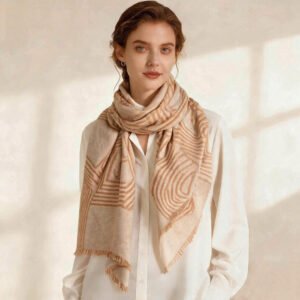
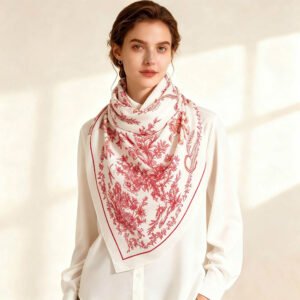
- Scarves and Shawls: Cashmere scarves and shawls emphasize softness and drape. High-quality yarn smoothness and uniformity ensure warmth and comfort. Natural fiber tones facilitate dyeing, achieving visually and tactilely high-end results.
- Accessories and Home Products: Gloves, hats, shawls, and luxury home textiles benefit from soft, comfortable cashmere. Fine yarn enhances the feel of small accessories and elevates overall product quality and sophistication.
| Inquiry Now | Email:info@hwcashmere.com | Whatsapp:+8613932982033 |
Every step from cashmere fiber to finished yarn relies on the experience, technology, and strict quality control of professional manufacturers. High-quality cashmere depends not only on premium raw materials but also on scientific processing and stable production systems. Professional cashmere manufacturer and cashmere yarn manufacturer like Jingshang, with over 30 years of experience and a complete supply chain, deliver soft, comfortable, and durable products for sweaters, scarves, and other accessories.
Choosing the right cashmere partner ensures product quality, enhances brand reputation, and strengthens market competitiveness. This article helps readers fully understand the value and applications of cashmere yarn, enabling informed decisions in sourcing, design, and production, bringing warmth and comfort to more consumers.