Table of contents
Overview of Cashmere Yarn: What Makes It Special
- Main Source Regions: Mongolia, Inner Mongolia, and the northwest regions of China. The cold climate and large temperature differences between day and night provide an ideal environment for cashmere goats to grow fine, elastic fibers.
- Fiber Characteristics: Cashmere fibers usually have a diameter of 14-19 microns, finer and softer than regular wool (20-35 microns), and are gentle on the skin. The fibers are moderately long and elastic, suitable for producing lightweight yet warm high-end yarn products.
- Comparison with Other Yarns:
- Alpaca fibers are coarser, slightly rough to the touch, and lack the lightness of cashmere;
- Regular wool is warm but can be itchy and has limited elasticity;
- Cashmere yarn combines softness, lightness, and elasticity, making it ideal for high-end sweaters, scarves, shawls, and handmade knitted items.
- Market Data: According to the International Wool Textile Organization (IWTO), global cashmere production is approximately 25,000 tons per year, with Mongolia and Inner Mongolia accounting for 60%-70% of the world’s high-quality cashmere. Cashmere supply is influenced by environment, climate, and animal growth cycles, making it scarce and expensive.
- Application Value: With its fine fibers and excellent warmth, cashmere yarn is widely used in high-end clothing and luxury markets, as well as in handmade knitting and DIY projects.
Advantages of Cashmere Yarn
Cashmere yarn has always been regarded as a premium material in the textile industry. Its advantages are not only in touch and warmth but also in fiber properties, processing performance, and market value. Detailed advantages include:
- Extreme Softness and Comfort: Cashmere fibers are only 14-19 microns in diameter, about half as fine as regular wool, making them extremely soft and smooth. Even when worn directly on the skin, they do not cause itching. This makes cashmere garments ideal for infants, people with sensitive skin, and high-end fashion clothing.
- Outstanding Warmth: The fibers contain abundant air pockets that effectively trap body heat, creating a lightweight yet highly insulating layer. Studies show cashmere’s insulation is about 30%-40% higher than regular wool, allowing even thin winter sweaters to provide warmth.
- Lightweight with Elasticity: High-quality cashmere yarn is lightweight and soft, yet elastic. The fibers stretch with body movement and return to their original shape, keeping garments and handmade items comfortable and durable.
- Natural Luxury: As a natural animal fiber, cashmere contains no chemical additives. Its soft luster gives clothing a premium look and feel. Sweaters, scarves, or shawls made from cashmere instantly elevate product grade and market competitiveness.
- Wide Applicability: Cashmere yarn is suitable not only for knitted sweaters, scarves, shawls, and hats but also for handmade knitting, DIY projects, and blended innovations, offering designers and craft enthusiasts abundant creative possibilities.
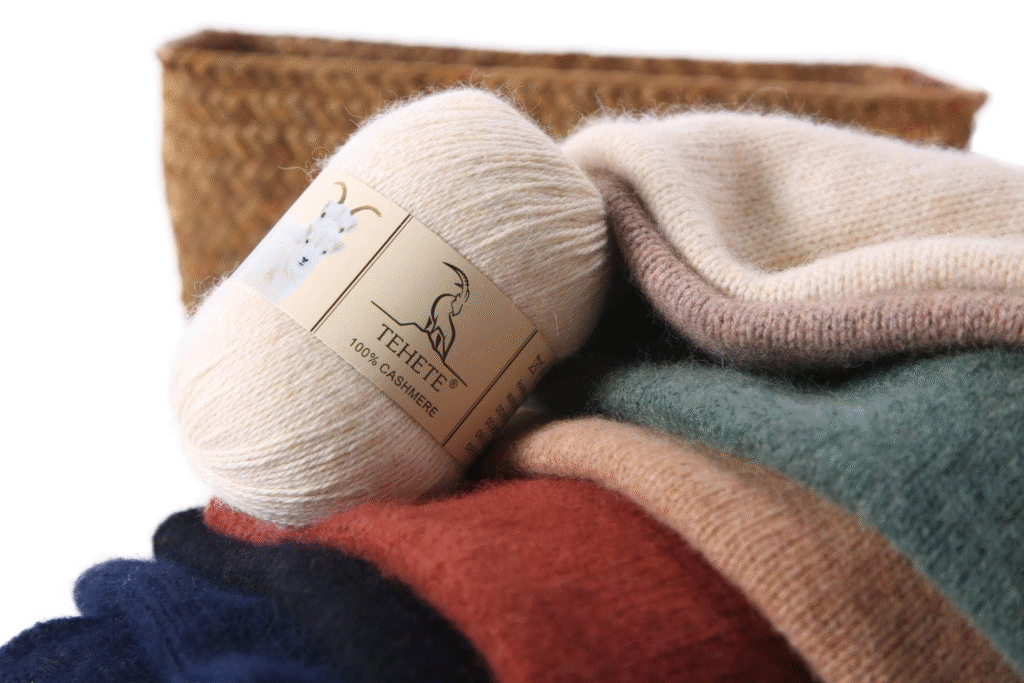
Disadvantages of Cashmere Yarn
Although cashmere yarn has clear advantages, its natural properties and scarcity also bring some limitations that need consideration:
- High Price: Cashmere has a limited annual output of approximately 25,000 tons, with high-quality long fibers even less. Combined with harvesting, sorting, spinning, and dyeing costs, pure cashmere or high-ratio blended yarns are significantly more expensive than regular wool or synthetic yarns, making cost control a key challenge for brands and crafters.
- Strict Care Requirements: Cashmere fibers are delicate and susceptible to pilling, shrinking, or deformation from friction or high temperatures. Daily care includes hand washing or low-temperature machine washing with specialized detergents, avoiding direct sunlight and high-temperature ironing to maintain softness and appearance.
- Relatively Limited Durability: Although elastic, the fine fibers can break or pill under frequent pulling or friction, especially in tightly worn or hand-knitted items, requiring extra care.
- Limited Supply: Cashmere supply is affected by animal growth cycles, seasons, and climate, with limited output, especially for high-quality long fibers. This is a key reason why high-end cashmere products remain consistently expensive.
- Dyeing and Processing Challenges: Cashmere dyeing is more challenging than ordinary wool and requires precise control of temperature, time, and dye quantity to ensure color fastness and softness. This places higher demands on production techniques and experience.
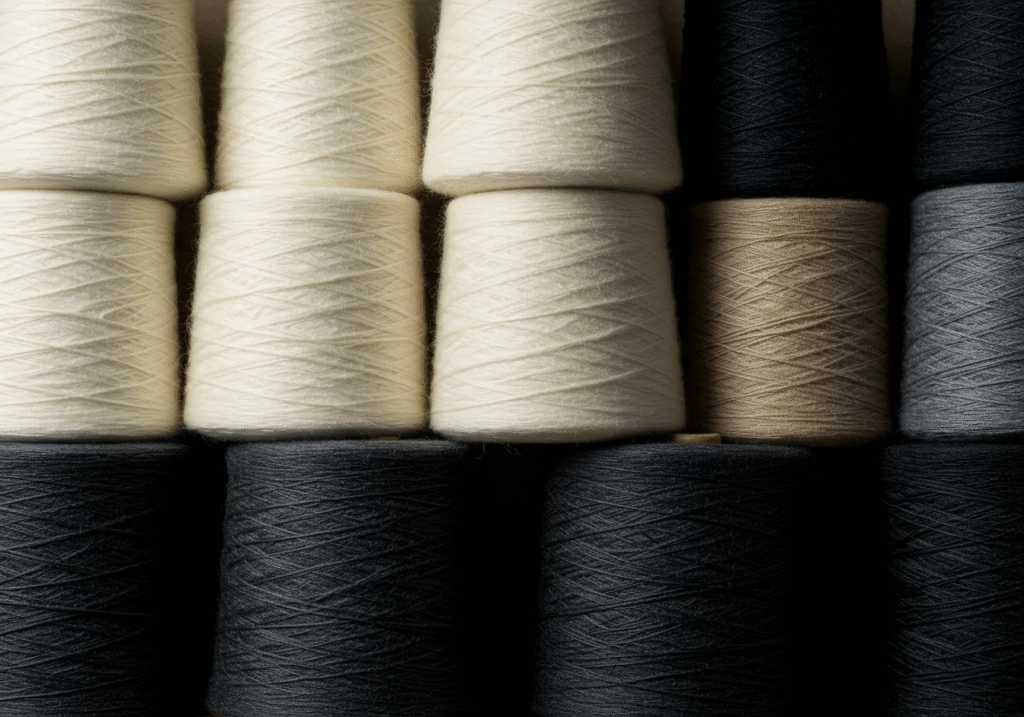
Jingshang: A Reliable Choice for Premium Cashmere Yarn
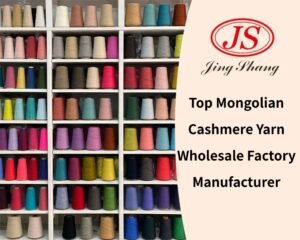
Choosing a reliable cashmere yarn supplier is crucial for high-end clothing and handmade products. Among many suppliers, Jingshang, with 33 years of professional manufacturing experience, has become a trusted cashmere yarn manufacturer and maintains a stable position in the mongolian cashmere yarn wholesale market.
- Rich History and Experience
Since its establishment in 1993, Jingshang has focused on producing cashmere yarn, sweaters, scarves, and accessories, accumulating extensive experience in raw material sourcing, dyeing, spinning, and knitting over more than thirty years, becoming a leading cashmere manufacturer and supplier in China. - High-Quality Raw Materials
Jingshang selects top-grade cashmere from the Inner Mongolia Plateau, with fine fibers, excellent softness, and natural warmth. Whether it is 100% pure cashmere yarn or different ratios of blended yarn, Jingshang delivers consistently high-quality products. - Advanced Production Technology
- Precision Dyeing: Adjusts temperature, time, and dye quantity according to color depth, ensuring vibrant and natural yarn while preserving softness and luster.
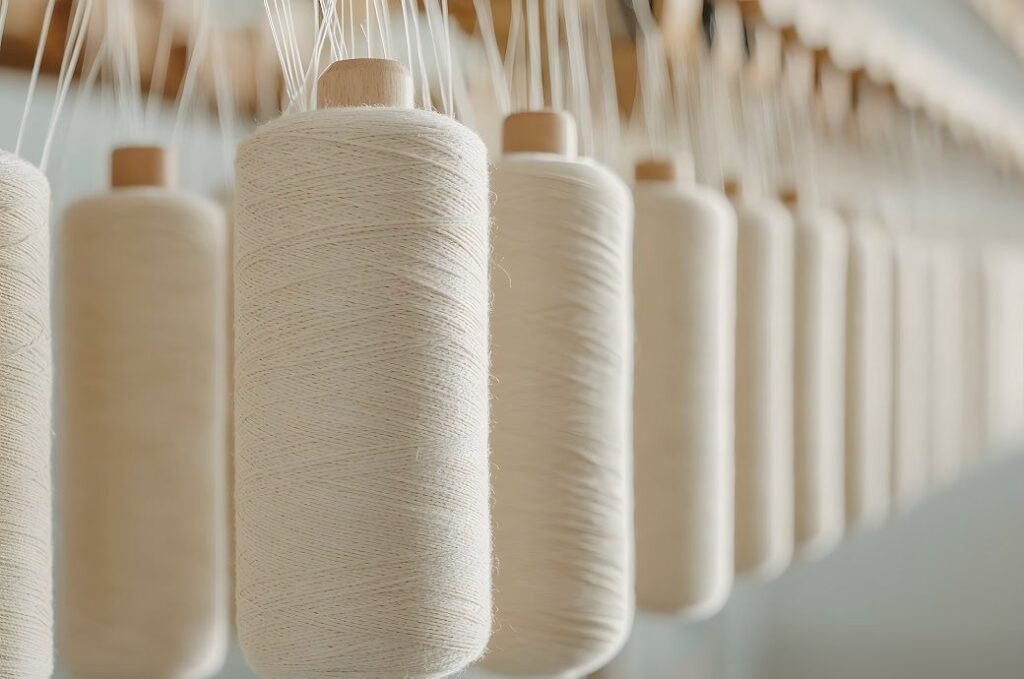
- Spinning Technology: Uses combed spinning, fine spinning, and tight spinning to produce uniform yarn density, minimal fuzz, and smooth weaving, avoiding breakage or stiffness during knitting.
- Quality Standards: Each batch undergoes fiber fineness testing, oil and moisture monitoring, color difference testing, and tensile and abrasion testing to ensure consistent and stable products.
- Factory Scale and Team Strength
Over 10,000 square meters of modern factory space, equipped with 80 precision machines and 100 skilled workers, ensuring high standards in every stage from raw material procurement to final delivery. - OEM/ODM and Customization
Provides comprehensive custom services, including new yarn colors, adjusted yarn counts, blended ratios, and brand-specific products. Whether small sample runs or large wholesale orders, Jingshang provides professional technical support and flexible production solutions.
With 33 years of industry experience, premium Inner Mongolian cashmere, advanced craftsmanship, and strong customization capabilities, Jingshang ensures high-quality, stable cashmere yarn, making it a reliable partner for global clients.
Value of Cashmere Yarn in Fashion and Handicraft Applications
Cashmere yarn is not only preferred for high-end garments but also holds unique value in fashion design and handicraft due to its natural properties and processing flexibility:
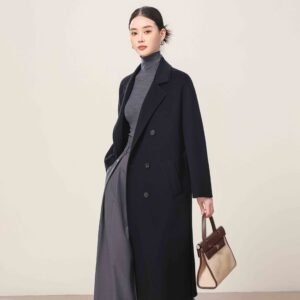
- High-End Garment Production: Cashmere yarn is used for sweaters, scarves, shawls, hats, and coats. Premium cashmere garments are soft, lightweight, and warm, meeting consumer demand for both comfort and luxury. In international high-end fashion markets, pure or high-ratio blended cashmere garments are positioned as premium, enhancing brand value.
- Handmade Knitting and DIY Projects: Knitting enthusiasts and crafters favor cashmere yarn for its soft, pliable qualities, making it suitable for personalized gifts, home décor, and creative projects. Its lightness and warmth add practicality and collectible value to handmade items.
- Blended Innovation Applications: Blending cashmere with wool, silk, or cotton combines softness, elasticity, and durability while reducing costs. Flexible blending ratios adapt to different market needs, such as lightweight warm sweaters, casual wear, or children’s clothing.
- Market Trends and Brand Value: With the promotion of sustainable textiles and natural high-end materials, premium cashmere yarn demand in the high-end market is steadily increasing. Traceable Mongolian cashmere is particularly favored by international brands. Using cashmere yarn enhances product grade and reflects a brand’s commitment to quality and natural materials.
- Creative and Design Potential: Cashmere yarn’s fineness, softness, and rich colors provide designers with creative possibilities. From innovative knitting patterns to color experiments, cashmere yarn’s flexibility and premium feel inject unlimited potential into fashion and handicraft markets.
| Inquiry Now | Email:info@hwcashmere.com | Whatsapp:+8613932982033 |
Cashmere yarn, with its softness, lightness, and warmth, is the first choice for high-end textiles and handmade products, but its high price, strict care requirements, and limited supply need attention. Choosing a reliable supplier like Jingshang ensures stable, high-quality cashmere yarn and provides extensive customization services. Understanding yarn characteristics, market trends, and relying on experienced manufacturers can maximize the value of cashmere products in luxury and handmade markets.