Key Takeaways
- 2026 Consumer Trends: Fashion brands are re-evaluating fall and winter outerwear materials. Consumers are increasingly focusing on garment quality, sustainability, and long-term value, making natural cashmere coats the mainstream choice for the high-end market.
- Core Performance Comparison: Polyester coats are affordable and versatile, while cashmere coats represent natural luxury, excellent lightweight warmth, durability, and timeless classic style.
- Quality Selection Matrix: Collections aiming for cost-effectiveness and mass production are suited for polyester; collections focusing on premium clients, quiet luxury, and sustainable fashion should prioritize natural cashmere coats.
- Quality Factory Assurance: Partnering with a professional cashmere coat factory with a 33-year history helps convert design concepts accurately into high-standard, market-ready collections.
- Jingshang Supply Chain Advantages: As leading cashmere coats manufacturers, Jingshang provides custom high-quality cashmere coats using Inner Mongolian cashmere, featuring a low MOQ of 50 pieces and authoritative certifications including CE, SGS, Oeko-Tex, and GRS.
The winter outerwear market is undergoing profound changes. As global consumers place greater emphasis on quality, sustainability, and long-term value, fashion brands are rethinking the foundational materials they select for their fall/winter outerwear collections. Among the numerous fabric options available, cashmere and polyester remain the two primary choices. Polyester coats are affordable and versatile, whereas cashmere coats represent natural luxury, durability, and timeless classic style. So, moving into 2026, which material will consumers actually prefer?
For fashion brands, apparel buyers, and custom clothing manufacturers planning their upcoming autumn and winter collections, understanding the core differences between cashmere and polyester coats is crucial for making better supply chain purchasing decisions. As a source cashmere coat factory with 33 years of manufacturing experience and leading cashmere coats manufacturers, Jingshang provides a comprehensive analysis of coat fabric selection for 2026 across four key dimensions: material performance, market trends, sustainability, and manufacturing craftsmanship.
Cashmere and Polyester Coats Core Differences
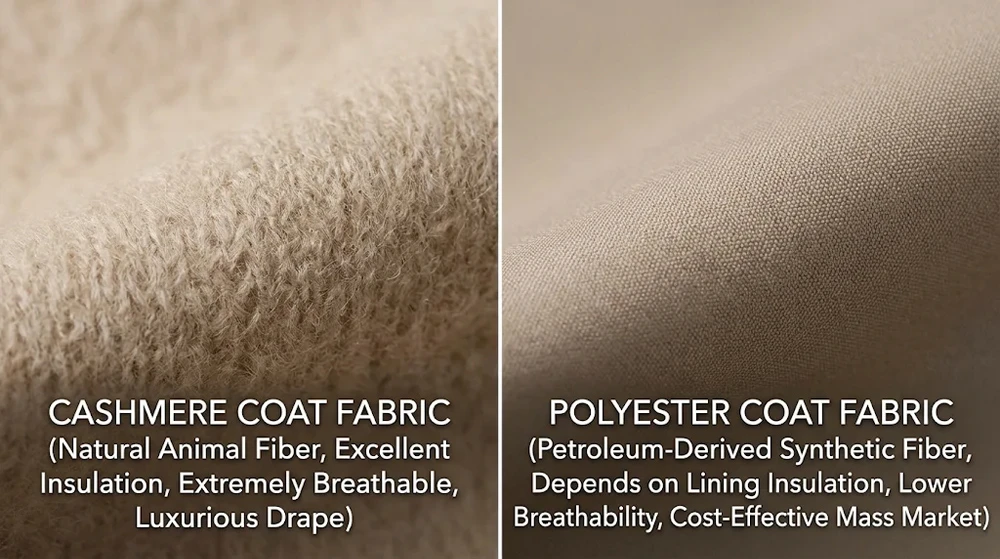
Before selecting materials, fashion brands and buyers need to clearly understand the underlying core differences between cashmere and polyester. Cashmere coats are crafted from natural animal fibers, specifically selected premium Inner Mongolian cashmere, offering exceptional natural thermal insulation, high breathability, and long-lasting durability when properly cared for, placing them in a high-end luxury position in the market. Polyester coats are made from petroleum-derived synthetic fibers; their warmth depends on lining insulation and fabric construction, with relatively lower breathability. Although generally durable, they carry a lower market grade and target the budget mass market. Working with a professional cashmere coat factory establishes this premium feel and performance advantage right at the raw material selection stage.
Both materials have their distinct uses, but they target completely different consumer needs and brand positioning. According to global fiber market report data from Textile Exchange, although synthetic fibers dominate total production volume, the purchasing ratio of natural cashmere fibers in mid-to-high-end outerwear is growing at an average annual rate of 8.5%.
| Feature | Cashmere Coat | Polyester Coat |
| Material Source | Natural animal fiber (Inner Mongolian cashmere / cashmere blend) | Petroleum-derived synthetic fiber (Polyester) |
| Thermal Insulation | Excellent natural insulation, up to 8 times warmer than standard fabrics | Depends on lining fill and fabric thickness |
| Breathability | Extremely high (natural microporous structure, self-breathing moisture control) | Relatively low (synthetic fiber structure, prone to heat and moisture buildup) |
| Durability | Long-lasting with proper care, maintains elegant drape | Strong wrinkle resistance, but prone to pilling and lower in perception |
| Sustainability | Renewable, biodegradable, short degradation cycle | Non-biodegradable, dependent on fossil fuel resources |
| Market Positioning | Premium luxury, Quiet Luxury | Affordable pricing, mass fast fashion market |
💡 Frequently Asked Questions
Q: Why are cashmere coats far superior to polyester coats in terms of warmth and comfort?
A: Cashmere fibers feature an extremely fine, natural crimp structure and microporous organization that traps a large amount of still air between fibers, forming an outstanding natural insulation layer. Furthermore, cashmere fibers can absorb up to 30% of their weight in moisture and release it outward, keeping the wearer warm without feeling stuffy in cold conditions, delivering a lightweight and comfortable wearing experience that synthetic fabrics like polyester cannot match.
Why Buyers Prefer Cashmere Coats in 2026
As we enter 2026, consumers buying fall and winter outerwear are no longer satisfied with mere basic cold protection; global fashion consumption psychology has undergone a clear structural shift. Consequently, apparel brands worldwide increasingly favor partnering with reputable cashmere coats manufacturers to secure premium natural fabric resources.
Modern purchasing decisions are driven primarily by the following core factors:
- Rising Value of Natural Materials: Modern consumers pay increasing attention to garment materials. Natural fibers like cashmere are highly valued for providing superior wearing comfort, excellent natural performance, a high-end appearance, and a closer connection to sustainable fashion.
- Natural Warmth and Lightweight Comfort: Cashmere possesses unique natural temperature-regulating properties, effectively trapping heat and blocking cold wind while allowing moisture to escape naturally. This makes it the preferred winter choice for high-latitude markets like Europe and North America without adding unnecessary bulk.
- Durability Creating Long-Term Value: Outerwear has transitioned from seasonal fast fashion into wardrobe investment pieces. High-quality cashmere coats, with their strong fiber structure, natural elasticity, and shape retention, align perfectly with the global buyer mindset of “buy better, wear longer.”
With the continued rise of the Quiet Luxury trend, the combination of minimal design and high-quality fabrics has become mainstream. For boutique brands and luxury retailers, choosing natural cashmere significantly enhances product perceived value and brand storytelling depth.
💡 Frequently Asked Questions
Q: What specific impact does the 2026 Quiet Luxury trend have on coat sourcing?
A: The rise of Quiet Luxury has reshaped consumer expectations. Customers are increasingly drawn to minimal designs, high-quality fabrics, fine craftsmanship, and products offering lasting value. Cashmere coats naturally fit this market trend, giving boutique brands, designer labels, and high-end retailers a great opportunity to create products with higher perceived value and storytelling potential.

How to Choose the Right Fabric for Your Outerwear Collection
The optimal fabric selection depends entirely on your brand positioning and target market preferences. While cashmere holds a natural premium advantage, polyester continues to play an important role in the global fashion market. Brands need to make precise trade-offs based on their commercial models. Experienced cashmere coat factory teams can typically provide scientific fabric blend recommendations tailored to different product lines.
When establishing procurement strategies, apparel brands can refer to the following selection criteria:
- Choose Cashmere Coats: Suitable for brand collections focusing on premium clientele, sustainable fashion, luxury winter outerwear, long-lasting products, and higher perceived value.
- Choose Polyester Coats: Suitable for brand collections focusing on highly competitive pricing, mass volume production, accessible fashion items, and functional daily wear.
| Sourcing Strategy Dimension | Cashmere Coat Line | Polyester Coat Line | Cashmere Blend Line |
| Brand Positioning | High-end Luxury / Designer Brands | Mass Fast Fashion / Value Retailers | Mid-to-High-End Fashion / Commercial Wear |
| Core Selling Points | Natural luxury, breathable warmth, superb drape | Affordable pricing, windproof/water-resistant, wrinkle-free | Soft hand feel, high cost-performance, durable |
| Target Sourcing Scenarios | Core classic styles, high-margin winter flagships | Mass volume styles, everyday functional winter coats | Seasonal transition styles, accessible luxury lines |
Many successful fashion brands also combine different material ratios, such as blending premium cashmere with special natural fibers, to balance luxury hand feel, wearing performance, and production costs.
💡 Frequently Asked Questions
Q: How should apparel brands balance fabric cost and Minimum Order Quantities (MOQ) when planning fall/winter collections?
A: Brands should allocate fabric tiers across product lines: use 100% cashmere for core luxury lines and cashmere blends for practical commercial lines. Simultaneously, partner with source cashmere coats manufacturers that support flexible small-batch customization, leveraging a low MOQ of 50 pieces to reduce upfront inventory pressure and market trial costs.

Why Partner with an Experienced Cashmere Coat Manufacturer
Choosing the right fabric is only the first step. The final quality of the coat depends heavily on the factory’s full-process refined manufacturing and quality control capabilities. When searching for globally compliant cashmere coats manufacturers, factory technical craftsmanship and quality standards serve as the core evaluation metrics.
In the development and production of high-end outerwear, the following stages play a decisive role:
- Fabric Selection: Selecting high-quality yarns and stable weaving processes to ensure anti-shrinkage and anti-pilling performance.
- Pattern Development: Precisely adjusting pattern structures according to ergonomics and fashion trends to endow the garment with an elegant drape and comfortable fit.
- Cutting Precision: Relying on high-precision equipment and experienced cutting technicians to ensure pattern matching, plaid alignment, and micron-level error control.
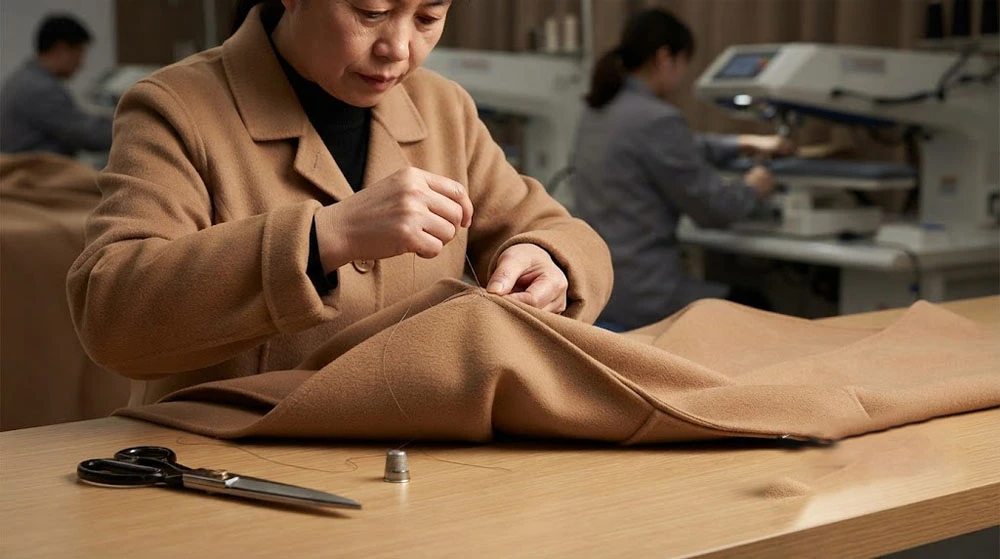
- Sewing Craftsmanship: Incorporating double-faced splitting, hand-stitching, and stress-point reinforcement to determine the garment’s visual flatness and longevity.
- Quality Control: Implementing raw material inspection, semi-finished inline checks, and 100% finished product inspection to eliminate defective items before shipment.
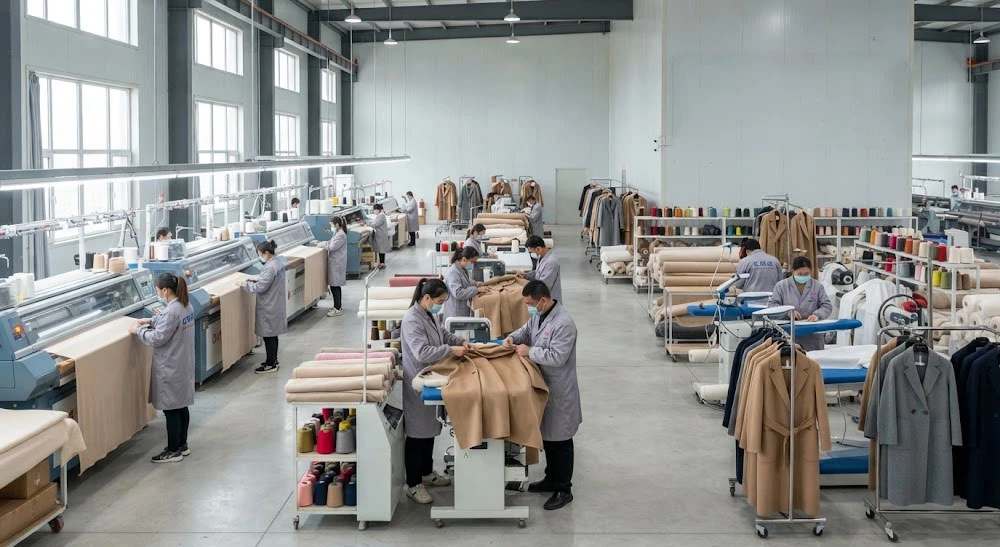
For brands developing premium cashmere outerwear, collaborating with an experienced cashmere coat factory boasting a 33-year history, a 10,000 m² production area, 100+ technicians, and 80 specialized machines helps transform design ideas into competitive, high-pass-rate market-ready collections.
💡 Frequently Asked Questions
Q: Why should brands choose a factory with over 30 years of history for double-faced cashmere coat production?
A: Double-faced cashmere coat manufacturing involves complex splitting, edge-stripping, and delicate hand-stitching techniques that require extremely high operator skill. A cashmere coat factory with 33 years of experience maintains a stable team of senior technicians and a mature quality management system, ensuring smooth, seamless joints and stitch densities that strictly meet international luxury OEM standards.
Partner with Jingshang to Build Your Cashmere Coat Collection
There is no single answer that fits all brands. Polyester remains an important component for affordable, high-volume fashion fabrics, but cashmere is increasingly favored by consumers seeking quality, sustainability, and timeless value. In 2026, the market direction is clear: consumers buy outerwear not just for basic warmth, but for better fabrics, finer craftsmanship, and longer-lasting products. For premium winter outerwear collections, natural cashmere remains the most reliable fabric choice.
Jingshang is a leading source cashmere coat factory, specializing in the production and customization of high-quality cashmere jackets and cashmere coats, serving global fashion brands, independent designers, and apparel wholesalers:
- Source Premium Fabrics: Utilizing premium natural cashmere from Inner Mongolia (100% cashmere and cashmere blends) to ensure an exceptionally soft hand feel, environmental friendliness, and superior warmth.
- Full-Dimension OEM & ODM Development: Supporting comprehensive customization of material blends, brand logos, custom patterns, Pantone colors, and pattern silhouette styles.
- Flexible Supply Chain Support: Offering small-batch customization starting at an MOQ of 50 pieces to help brands quickly perform market testing.
- Full International Compliance Certifications: Products meet strict CE, SGS, Oeko-Tex Standard 100, and GRS standards for smooth custom clearance across major global markets.
As trusted professional cashmere coats manufacturers for international clients, Jingshang relies on extensive hardware facilities and deep technical expertise to ensure a seamless transition for your designs from sample development to bulk delivery.
💡 Frequently Asked Questions
Q: What specific customization details does Jingshang support?
A: Jingshang provides a complete one-stop ODM/OEM solution ranging from Inner Mongolian cashmere fabric selection, custom trims and hangtags, sample prototyping, to attaching CE/SGS test reports to shipments, fully assisting brands in building their signature cashmere coat lines.
Looking for reliable cashmere coats manufacturers to partner with for your upcoming fall/winter collection? Contact the professional Jingshang team today to request free fabric swatches, technical consultation, and custom project quotes!
| Inquiry Now | Email:info@hwcashmere.com | Whatsapp:+8613932982033 |
In the global outerwear market of 2026, cashmere coats demonstrate an unmatched competitive advantage in high-end and accessible luxury segments due to their natural thermal regulation, excellent breathability, supreme softness, and eco-friendly characteristics. While polyester coats continue to occupy a position in mass-market budget lines, fashion brands prioritizing brand equity and customer loyalty are fully shifting toward natural cashmere fabrics. Choosing to partner with Jingshang, an experienced source cashmere coat factory with a 33-year manufacturing heritage, a 10,000 m² production base, and full international certifications, provides top cashmere coats manufacturers and fashion brands with a solid quality and supply chain foundation for the 2026 autumn and winter season.