Key Takeaways
- Pure vs. Blended Fiber Specs: 100% pure cashmere yarn uses ultra-fine fibers under 15.5μm in micron width for ultimate skin comfort, while technical blends incorporate wool, silk, cotton, or yak to increase tensile strength by up to 40% and reduce raw material costs.
- Functional Performance: Wool blends raise pilling resistance to Grade 3-4; silk blends boost surface luster by 25%; cotton blends enhance moisture management for multi-season apparel; yak blends boost durability by 20%.
- Application Alignment: Woolen yarns (2/26Nm) suit classic 12G sweaters, whereas worsted yarns (2/48Nm) excel in high-density 16G/18G lightweight garments.
- Strict Quality Control: Premium yarn selection requires technical verification through ISO 17751-2 fiber analysis, single-yarn breaking strength (≥150 cN), and Grade 4-5 colorfastness.
- Jingshang Customization: Supported by 33 years of manufacturing heritage, a 10,000 m² facility, 80 production machines, and 100+ technicians, Jingshang provides custom blend ratios, Pantone color matching (ΔE<0.5), and certified sustainable production under OEKO-TEX Standard 100, GRS, SGS, and CE.
Navigating the global luxury textile market requires a thorough understanding of fiber specifications, spinning dynamics, and functional material performance. For luxury apparel manufacturers, knitwear designers, and global procurement teams, choosing between pure and blended fibers directly determines hand-feel, structural durability, drape, and overall garment economics.
As specialized wholesale cashmere yarn producers, leading cashmere yarn suppliers analyze these technical parameters to help buyers strike the exact balance between natural elegance and long-term durability. Evaluating physical fiber metrics enables textile sourcing managers to select optimal yarns for specific flat knitting machine gauges and seasonal apparel collections.
Pure Cashmere Yarn Features
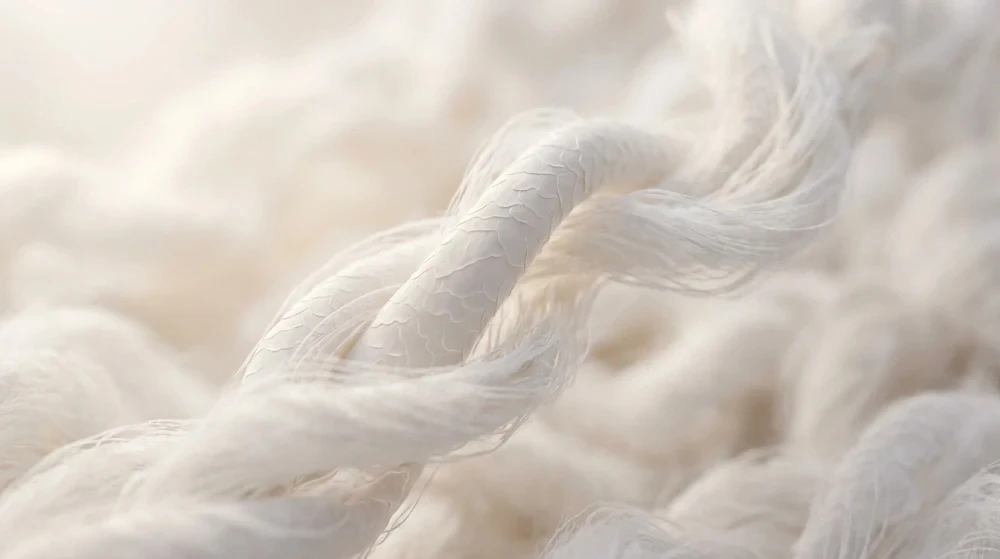
Pure cashmere yarn consists entirely of delicate undercoat fibers harvested from cashmere goats adapted to extreme freezing climates in Inner Mongolia. The microscopic structure of these natural fibers features high density 3D crimps that form insulating air pockets, offering unprecedented thermal retention while maintaining an exceptionally light weight. Experienced cashmere yarn suppliers classify raw stock by micron count and staple length to guarantee optimal luxury performance.
Textile testing laboratories quantify pure cashmere quality by measuring physical fiber dimensions and thermal insulation metrics against standardized natural animal fiber benchmarks:
- Fiber Micron Width: High-grade pure cashmere measures strictly <= 15.5 μm, creating an ultra-soft tactile feel without cutaneous nerve irritation.
- Average Staple Length: Premium raw stock features lengths between 32 mm and 38 mm, providing necessary fiber overlap during spinning.
- Thermal Insulation Ratio: Delivers up to 8 times higher thermal retention than standard sheep wool by trapping stationary air within the fiber matrix.
- Specific Material Density: Weighs approximately 30% lighter than fine wool, enabling lightweight garments with superior insulation.
Because pure cashmere fibers possess smaller cross-sectional diameters, they require precise tension management during spinning to avoid structural damage. Garments crafted from pure cashmere excel in softness, breathability, and luxurious comfort, making them the benchmark raw material for high-end knitwear lines.
💡 Frequently Asked Questions
Q: What is the main difference between pure cashmere and cashmere blend yarn?
A: Pure cashmere yarn contains 100% cashmere fibers averaging under 15.5μm in diameter, offering maximum softness and thermal insulation. Cashmere blend yarn combines cashmere with fibers like wool, silk, or cotton to boost tensile strength, alter drape, improve pilling resistance, and optimize production costs.
Cashmere Blend Yarn Options
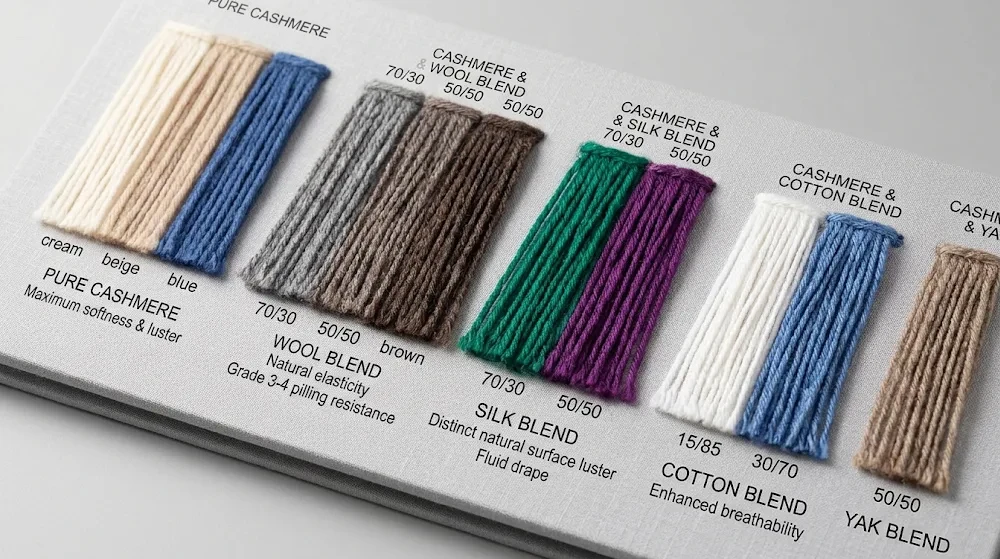
Engineered fiber blends combine natural cashmere with complementary textile fibers to optimize physical performance for specific apparel categories. Sourcing high-grade wholesale cashmere yarn blends allows fashion brands to combine contrasting fiber lengths, tensile strengths, and moisture capacities, tailoring yarn to withstand higher mechanical stress while preserving a rich hand-feel.
Textile scientists measure blended formulations to maximize structural advantages while keeping cashmere’s signature tactile properties:
- Cashmere and Wool Blends (70/30, 50/50): Incorporating fine merino wool increases single-yarn breaking strength by 40% and elevates pilling resistance to Grade 3-4.
- Cashmere and Silk Blends (70/30, 50/50): Adding continuous mulberry silk fibers enhances natural surface luster by 25% and creates a fluid, elegant drape for spring lines.
- Cashmere and Cotton Blends (15/85, 30/70): Blending long-staple cotton enhances breathability, reduces raw material expenses by up to 60%, and extends wearability into transitional seasons.
- Cashmere and Yak Blends (50/50): Combining yak down delivers thermal retention matching pure cashmere while boosting overall abrasion resistance by 20%.
Each fiber combination addresses specific performance needs across diverse garment lines. Wool blends add vertical elasticity for structured outerwear, silk blends introduce subtle sheen for evening accessories, and cotton blends allow for easy-care daily apparel.
💡 Frequently Asked Questions
Q: Which cashmere blend yarn offers the best strength and durability?
A: A cashmere and merino wool blend (such as 70/30 or 50/50) offers the highest overall tensile strength and resilience. The wool fibers add natural elasticity, raising pilling resistance to Grade 3-4 and preventing sweater deformation over time.
Fiber Application Guidelines
Selecting the correct yarn count (Nm) and processing technique—woolen versus worsted spinning—depends on the targeted flat knitting machine gauge (G) and intended fabric weight. Partnering with professional cashmere yarn suppliers helps ensure yarn dimensions match machine needles precisely, preventing yarn breaking during high-speed production.
Textile manufacturing guidelines map yarn counts and fiber choices directly to standard machinery specifications and end-use garment designs:
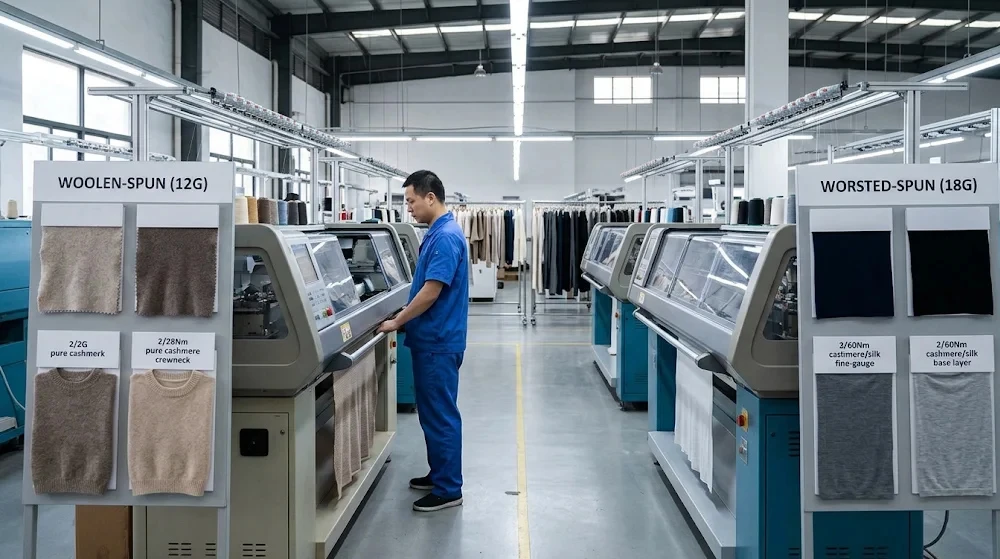
- Coarse Heavy Outerwear (3G – 7G): Utilizes heavier woolen yarns from 2/12Nm to 2/16Nm (often cashmere/wool blends) to create bulky, warm winter coats and heavy-gauge knits.
- Classic Winter Sweaters (12G): Employs standard 2/26Nm to 2/28Nm woolen yarns in 100% pure cashmere or rich blends for mid-weight crewnecks and scarves.
- Fine Base Layers (14G – 16G): Requires refined 2/48Nm to 2/60Nm worsted yarns (such as cashmere/silk blends) for lightweight, body-fitting garments.
- Ultra-Light Summer Knits (18G): Demands high-count worsted yarns up to 2/80Nm, delivering thin, breathable fabrics for multi-season wear.
Woolen-spun yarns retain a lofty, open structure that maximizes surface softness, ideal for traditional 12-gauge knitwear. In contrast, worsted yarns align longer fibers parallel to each other, producing sleek, smooth, and snag-resistant surfaces engineered for fine-gauge automated machines.
💡 Frequently Asked Questions
Q: What yarn count is recommended for 12-gauge cashmere sweaters?
A: A 2/26Nm or 2/28Nm woolen-spun yarn is the industry standard for 12-gauge (12G) flat knitting machines. This count provides the optimal density, softness, and cover required for classic winter knitwear.
Yarn Quality Inspection Standards
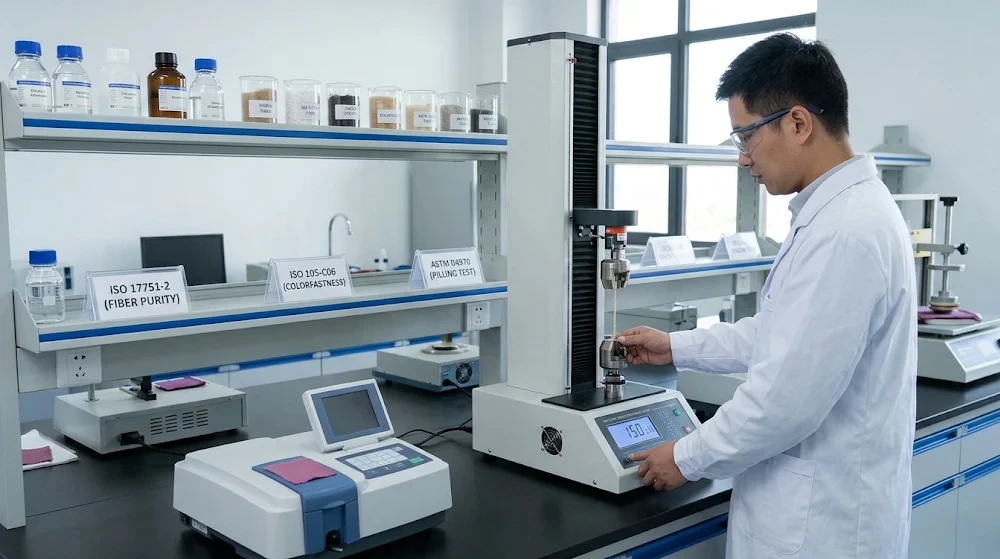
Comprehensive laboratory testing ensures batch-to-batch consistency for B2B buyers investing in wholesale cashmere yarn. Professional procurement requires strict quality verification to evaluate physical fiber behavior before initiating mass garment production.
International standards establish formal testing protocols to confirm fiber purity, color fastness, and mechanical resilience under mechanical stress:
- Fiber Content Analysis (ISO 17751-2): Uses scanning electron microscopy (SEM) to verify 100% fiber purity or exact blend ratios without fiber damage.
- Colorfastness to Washing (ISO 105-C06): Guarantees dyed fibers achieve a Grade 4-5 rating, maintaining shade stability across repeated wash cycles.
- Single Yarn Tensile Strength (ISO 2062): Measures breaking tenacity, ensuring single-strand tension reaches at least 150 cN to minimize downtime on industrial knitting lines.
- Color Tolerance Accuracy (CIELAB): Uses digital spectrophotometers to maintain strict color consistency with a Delta E < 0.5 tolerance relative to master swatches.
In addition to tensile and color testing, Martindale abrasion protocols (ASTM D4970) evaluate pilling behavior under repeated friction cycles. Establishing verified physical metrics protects apparel brands from unexpected shedding, garment shrinkage, or color bleeding in retail markets.
💡 Frequently Asked Questions
Q: How do textile laboratories test cashmere yarn quality and colorfastness?
A: Laboratories use microscopic analysis (ISO 17751-2) for fiber identification, spectrophotometers to verify color matching ( △E < 0.5), and ISO 105 standards to grade colorfastness on a 1-5 scale, ensuring yarn meets international quality benchmarks.
Custom Cashmere Yarn Manufacturing
With 33 years of specialized manufacturing experience, Jingshang stands out among global cashmere yarn suppliers as a reliable production partner. Operating across a 10,000 square meter modern industrial facility, our factory houses 80 advanced automated spinning machines supported by over 100 skilled technicians. We focus exclusively on spinning high-grade pure and custom-blended cashmere yarns, translating raw fibers into consistent, production-ready yarns for international buyers.
Jingshang provides end-to-end customization capabilities tailored to the technical requirements of global apparel manufacturers:
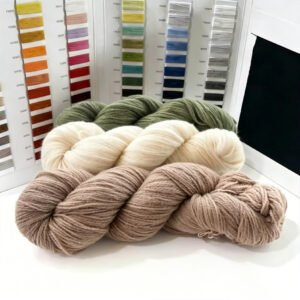
- Tailored Fiber Blend Formulation: We spin 100% pure cashmere yarn alongside custom blend ratios combining wool, silk, cotton, or yak in any customer-specified ratio (e.g., 90/10 to 10/90).
- Flexible Yarn Counts and Color Matching: We produce custom yarn counts ranging from 2/12Nm to 2/80Nm in both woolen and worsted spinning, achieving strict color accuracy (Delta E < 0.5) to match Pantone codes or physical swatches.
- Certified Sustainable Dyeing: Our eco-conscious dyeing processes meet rigorous international standards, backed by OEKO-TEX Standard 100, Global Recycled Standard (GRS), SGS, and CE certifications.
Our flexible production lines accommodate both large wholesale shipments and specialized low-MOQ custom runs. By integrating raw material sourcing from Inner Mongolia with computerized color matching and strict in-line quality control, Jingshang provides reliable textile solutions that help brand partners maintain competitive market positioning.
💡 Frequently Asked Questions
Q: Can Jingshang manufacture custom cashmere blend ratios for wholesale orders?
A: Yes. Jingshang provides full-service OEM/ODM customization, allowing buyers to specify exact fiber proportions (such as custom cashmere/wool or cashmere/silk ratios), custom yarn counts (2/12Nm to 2/80Nm), and custom dye shades with low minimum order quantities.
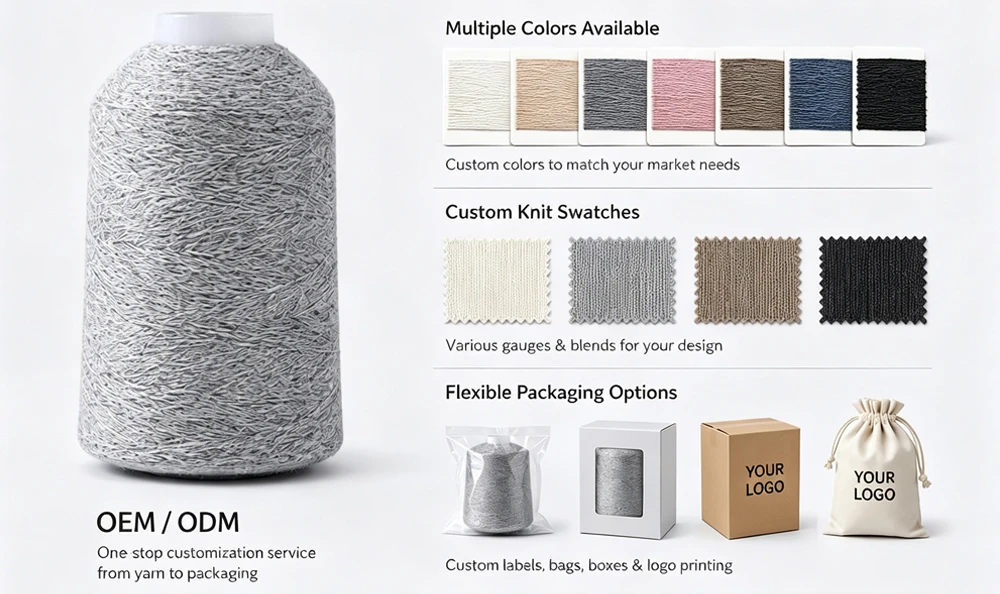
Upgrade your next knitwear collection with premium pure and custom-blended cashmere yarns engineered to your exact specifications. Contact Jingshang’s technical engineering team today to request custom color cards, tailormade blend formulations, and free yarn samples for factory testing!
| Inquiry Now | Email:info@hwcashmere.com | Whatsapp:+8613932982033 |
Choosing between pure cashmere yarn and engineered fiber blends comes down to balancing luxury texture, structural performance, and cost targets. Selecting 100% pure fibers delivers unmatched softness and warmth, while custom options from trusted wholesale cashmere yarn manufacturers provide increased durability and design flexibility. Partnering with established cashmere yarn suppliers like Jingshang ensures access to certified raw materials, custom blend development, and reliable batch-to-batch quality across all your production lines.