Table of contents
Understanding Cashmere Sweaters
Cashmere sweaters are renowned for their softness, lightness, and warmth, making them an essential high-end item in any winter wardrobe. To help readers better understand cashmere sweaters, we can break it down into the following points:
1. Definition and Characteristics of Cashmere Sweaters
- Cashmere sweaters are knitted garments made from fine fibers of cashmere goats, known for their softness and comfort.
- Cashmere fibers typically have a diameter of 18–19 microns, about 5–6 times finer than human hair (source: China Cashmere Association).
- Lightweight, warm, and close-fitting, they are suitable for winter and transitional seasons.
2. Sources of Cashmere Sweaters
- Pure Cashmere Sweaters: Made entirely of natural cashmere fibers, offering the softest touch and best warmth.
- Blended Cashmere Sweaters: Cashmere blended with wool, nylon, or silk to enhance durability or achieve special effects.
- Different sources directly affect the feel, warmth, and longevity of the garment.
3. Advantages of Cashmere Sweaters
- Softness: Fine fibers provide a gentle touch, minimizing itchiness.
- Warmth: The fibers trap air, providing excellent insulation.
- Lightweight: Easy to fold and carry without restricting movement.
Cashmere Sweater Production Process
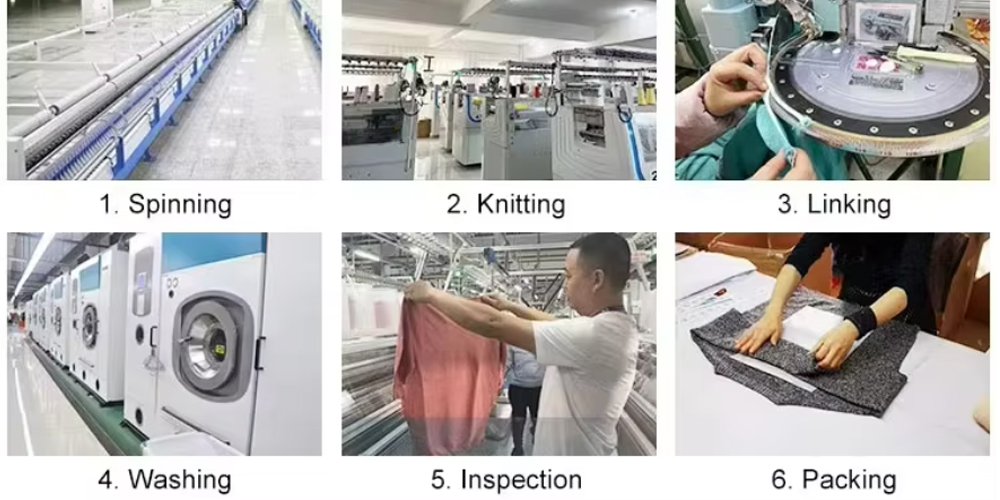
The production of cashmere sweaters is a meticulous craft, with every step directly affecting the final product’s comfort, warmth, and durability. The detailed production process is as follows:
1. Fiber Selection
High-quality cashmere fiber is the foundation for premium sweaters. Selection considers fiber length, diameter, softness, and purity. Long fibers produce smooth, fine garments, while shorter fibers are often used in blends or secondary products. Fiber diameter affects softness; premium cashmere is usually below 18 microns and longer than 35 mm. Selecting fibers properly determines comfort and durability. Jingshang, as an experienced cashmere sweater factory, implements strict fiber selection standards, with each batch manually and mechanically inspected for consistent quality.
2. Dehairing & Carding
Dehairing removes coarse hairs and impurities, essential for comfort. Carding aligns fibers into a uniform web for spinning. Common issues include fiber breakage and clumping. Jingshang uses advanced dehairing equipment and secondary manual inspection to ensure fiber integrity, smoothness, and uniformity for stable yarn production.
3. Spinning & Knitting
Spinning determines yarn uniformity and garment handfeel. Ring spinning produces fine, tightly aligned fibers for smooth textures, air-jet spinning suits blends or small-batch production. Knitting affects elasticity, appearance, and durability. Flat knitting is used for basic designs, while ribbing and jacquard add texture and stretch. Jingshang uses advanced knitting machines and skilled technicians to control yarn tension and stitch density, ensuring soft, comfortable, and durable sweaters as a professional cashmere sweater manufacturer.
4. Dyeing & Finishing
Dyeing gives color and must maintain fiber integrity. Common methods include bath dyeing and continuous dyeing; small batches may use low-temperature eco-friendly dyeing. Finishing includes softening, anti-pilling, and enhancing warmth. Jingshang adheres to OEKO-TEX and ISO14001 standards, combining high quality with environmental sustainability.
5. Quality Control
Quality control ensures each sweater meets high standards. Tests include yarn consistency, fabric density, colorfastness, and fiber integrity. Jingshang uses tactile evaluation, microscopes, and colorimeters to detect defects, preventing shrinkage, pilling, or deformation. The experienced QC team ensures every batch meets international standards, reflecting their expertise as a cashmere sweater manufacturer.
6. Packaging & Storage
Proper folding, wrinkle-resistant packaging, and storage conditions affect product quality and longevity. Low humidity and ventilated storage prevent deformation and fiber damage. Jingshang’s professional packaging extends sweater life to 5–7 years, ensuring customers receive perfect products.
Understanding Cashmere Quality and Certifications
The quality of cashmere directly impacts comfort and longevity. Premium sweaters undergo strict fiber selection, yarn spinning, and knitting processes and hold authoritative certifications:
1. Cashmere Grade
- Graded based on fiber diameter, length, and purity. Premium fibers are below 18 microns in diameter, longer than 35 mm, soft and straight, improving garment comfort and warmth.
- Coarse or uneven fibers reduce softness and cause pilling. Jingshang strictly controls fiber grade for each batch to meet high-end standards.
2. Yarn Quality
- Uniform yarn is essential for smooth, comfortable knitwear.
- In blends, the ratio, mixing method, and yarn tension affect durability. Jingshang uses advanced spinning equipment and skilled technicians to ensure stable yarn quality, meeting international custom requirements.
3. International Certifications
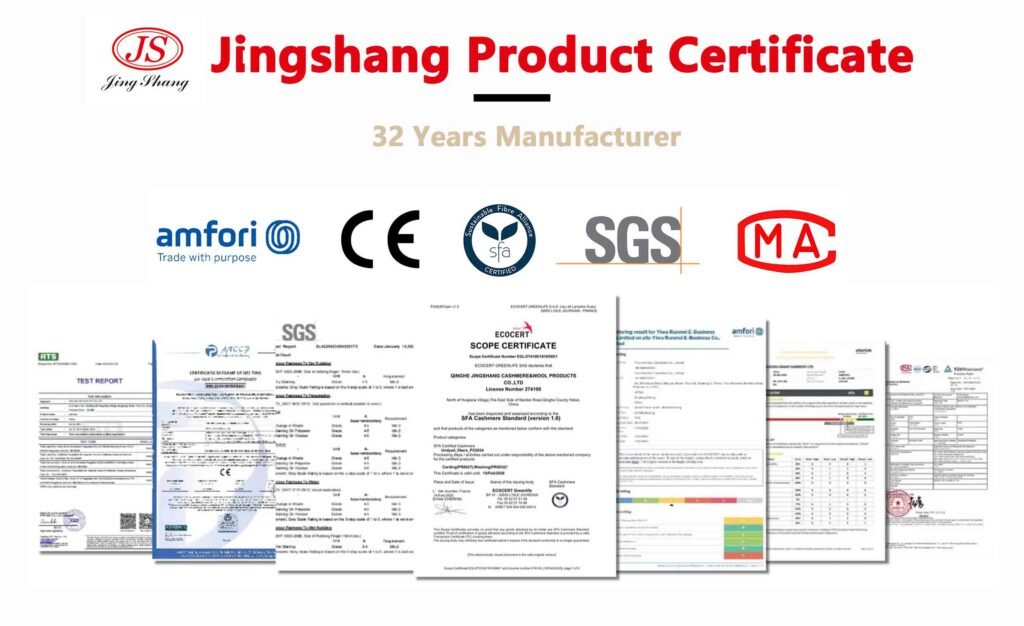
- ISO9001: Ensures standardized, traceable production processes for consistent quality.
- OEKO-TEX Standard 100: Guarantees garments are skin-safe and free of harmful substances.
- ISO14001 Environmental Management: Ensures environmentally sustainable production.
- These certifications give brands and consumers confidence in quality and safety and support Jingshang’s custom services.
4. Testing and Quality Control
- Cashmere sweaters are tested for fiber diameter, yarn consistency, and fabric colorfastness.
- Tools such as microscopes, colorimeters, and tactile measurements ensure fiber integrity and uniformity.
- Jingshang’s strict QC system ensures each product meets international high-end market standards.
Jingshang’s Expertise and Custom Services
With 33 years of history, Jingshang is a leading cashmere sweater factory and cashmere sweater manufacturer. Leveraging extensive experience, premium raw materials, and advanced equipment, Jingshang provides end-to-end solutions from yarn to finished garments, ensuring high-end quality in every sweater and accessory.
1. Decades of Expertise
- Founded in 1990, Jingshang has 33 years of experience producing cashmere sweaters, scarves, and accessories.
- Accumulated expertise in fiber sourcing, dyeing, spinning, and knitting, capable of meeting high-end custom requirements.
- Upholding “warmth, home comfort” as corporate values, combining technical experience with innovation to enhance product quality.
2. Premium Raw Materials
- All raw materials sourced from Inner Mongolia Plateau, fibers below 18 microns, straight and soft, ensuring comfortable, warm sweaters.
- Fibers undergo strict inspection for fineness, purity, and length to ensure stable, durable, and soft yarn.
- High-quality raw materials increase product value and support differentiated, high-end products for clients.
3. Advanced Production Technology and Equipment
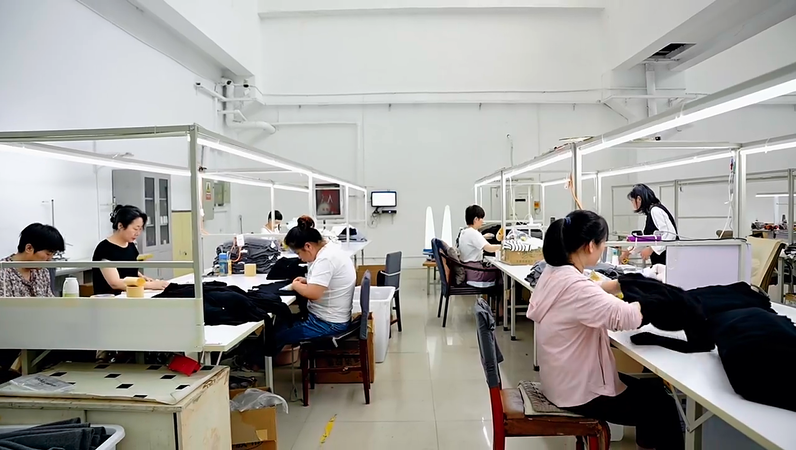
- Jingshang operates over 10,000 sqm modern factory, with 100 skilled employees and 80 precision machines.
- Combing, fine spinning, and compact spinning technologies ensure uniform yarn density and minimal fuzz, preventing breakage and stiffness.
- Dyeing carefully controls temperature, time, and dye dosage, producing vibrant, natural colors while maintaining softness.
- Full-process QC includes fiber fineness, moisture and oil content, color consistency, and tensile/wear tests. Each batch has inspection records for stable quality.
4. Custom Services and OEM/ODM Support
- Complete customization process for pure cashmere or blended yarn development.
- Supports development of new colors, specific yarn counts, blending ratios, and brand-exclusive products.
- Extensive OEM/ODM experience allows rapid response to market changes, small-batch prototyping, and large-scale production.
5. Sustainability and Quality Assurance
- Every production stage follows strict quality standards to ensure consistent product stability.
- Environmental and sustainable practices comply with international certification standards.
- Jingshang’s cashmere products are trusted by many top brands worldwide.
FAQ on Cashmere Sweaters
1. Do cashmere sweaters pill easily?
- High-quality sweaters have minimal pilling due to combed spinning and knitting.
- Avoid frequent friction and wash gently using hand wash or delicate cycle to extend life.
2. How to identify pure vs. blended cashmere?
- Pure cashmere feels softer, elastic, and glossy.
- Blends may feel heavier or slightly less elastic; testing instruments or stretch tests can detect ratios.
3. How to care for cashmere sweaters?
- Prefer low-temperature hand wash or dry cleaning; avoid hot water and tumble drying.
- Fold and store in dry, ventilated spaces, avoid hanging to prevent deformation.
- Lightly brushing the surface regularly maintains fiber alignment and softness.
4. What customization services does Jingshang provide?
- Full-range customization for yarn color, count, blending ratio, and knitting techniques.
- Supports OEM/ODM small-batch prototyping and large-scale production, assisting brands in exclusive product development.
| Inquiry Now | Email:info@hwcashmere.com | Whatsapp:+8613932982033 |
By understanding cashmere fiber characteristics, production processes, quality certifications, and Jingshang’s expertise, it is clear that high-quality cashmere sweaters provide not only softness and warmth but also precise craftsmanship and reliable manufacturing systems.
With 33 years of experience, premium Inner Mongolia fibers, modern factory equipment, comprehensive QC processes, and strong OEM/ODM capabilities, Jingshang delivers high-quality, sustainable, and stable cashmere products. Whether pure cashmere or blended, Jingshang meets global customer customization needs, helping brands create high-end, differentiated products.