Key Takeaways
- Grade A Fiber Specification Drives Premium Retail Margins: True Grade A cashmere (14.5–15.5 μm diameter, ≤52 mm staple length) stays well below human skin itch thresholds (18–20 μm), delivering an unparalleled warmth-to-weight ratio that commands 3x to 5x higher retail pricing than fine Merino wool with minimal price elasticity.
- Higher Anti-Pilling Durability Reduces Return Costs: Long-staple Grade A fiber achieves Grade 3 or higher pilling resistance (ISO 12945-2), dramatically lowering consumer return rates, preserving brand reputation, and protecting net profits.
- Batch-Level Testing Guarantees Product Integrity: Securing high margins requires strict laboratory verification, including IWTO-12 fiber diameter reports, SEM composition analysis, and OFDA coefficient of variation checks.
- Strategic Fiber Blending Optimizes Catalog Price Points: Utilizing precise 70/30 cashmere-silk or 70/30 cashmere-merino formulations allows brands to expand lightweight spring collections or lower yarn input costs by 40% to 55% while maintaining luxury hand-feel.
- Direct 33-Year Factory OEM Sourcing Maximizes ROI: Partnering directly with Jingshang removes traditional 15% to 25% trading company markups, offering accessible 500-piece MOQs and complete manufacturing control over 10,000 square meters of production space.
The global luxury fashion market consistently generates its highest profit margins within the premium cashmere segment. Unlike standard synthetic fabrics or lower-grade wool, genuine cashmere possesses rare physical characteristics that command exceptional price points. When B2B fashion brands, department store buyers, and gift importers partner with a dedicated wholesale cashmere scarf manufacturer, they unlock a structural profit advantage built on raw material superiority and direct supply chain execution.
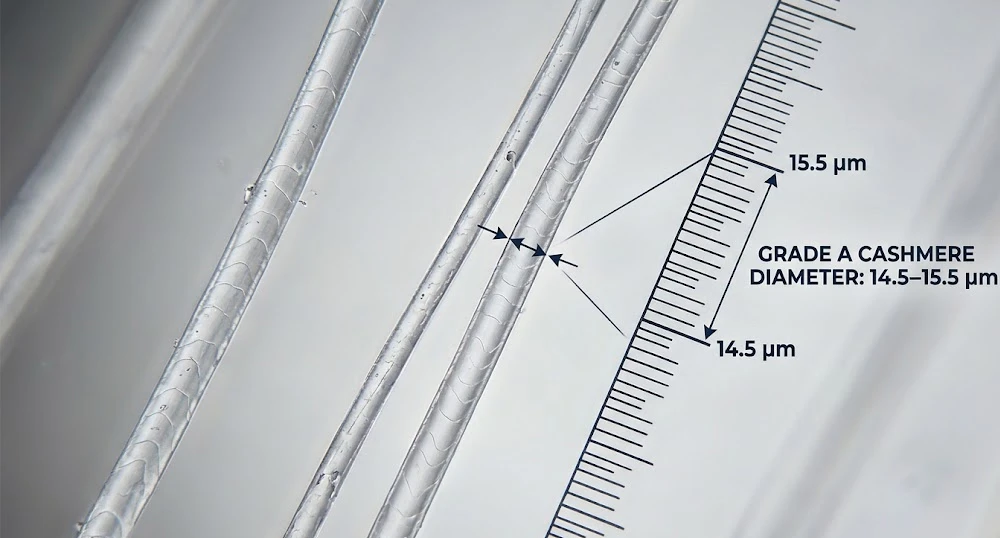
Raw cashmere fiber harvested from Inner Mongolian Capra Hircus goats features an average diameter of 14.5 to 15.5 microns and a staple length up to 52 millimeters. Because human skin typically perceives tactile itchiness at 18 to 20 microns, Grade A cashmere sits comfortably below this sensory threshold. Choosing Grade A fiber is not just a marketing attribute; it is the fundamental profit driver of the entire accessory line. This ultra-fine diameter creates microscopic thermal pockets, offering a warmth-to-weight ratio unmatched even by fine 17.5-micron Merino wool.
This inherent physical advantage translates directly into commercial profitability. Products crafted from verified Grade A cashmere routinely achieve 3 to 5 times the retail price of equivalent fine wool scarves while exhibiting minimal price sensitivity among high-net-worth consumers. Furthermore, the longer staple length minimizes pilling and shedding, which directly slashes product return rates for retailers and maximizes overall customer lifetime value. Sourcing directly from an authentic cashmere scarf supplier allows buyers to eliminate middleman cost inflation, guarantee batch-level fabric authenticity, and maintain expanding gross margins season after season.
Grade A Cashmere Fiber Specs
The profit engine of any luxury cashmere accessory resides within the physical dimensions of its raw fiber. Cashmere quality is divided into three distinct commercial categories evaluated under IWTO-12 testing standards. Grade A fiber represents the gold standard of natural textiles, defined by a mean diameter between 14.5 and 15.5 microns and a staple length reaching 52 millimeters. Grade B fiber typically measures 16 to 17 microns with shorter, broken fibers resulting from secondary dehairing processes. Grade C fiber often exceeds 18 microns or contains undisclosed coarse wool blends, failing the international technical definition of true cashmere.
Selecting true Grade A cashmere unlocks clear profit mechanisms across retail and wholesale channels:
- Uncompromised Retail Markups via Prickle-Free Comfort: Grade A fiber (14.5–15.5 μm) remains far below the 18-micron human cutaneous itch threshold, ensuring a silky, featherlight hand-feel that commands maximum luxury markup without price resistance.
- Profit Protection Through Low Pilling & Reduced Return Rates: Long-staple Grade A fibers (≤52 mm) lock tightly into yarn structures. ISO 12945-2 Martindale testing confirms Grade 3 or higher pilling resistance after 3,000 cycles, preventing the high customer return rates that destroy retail profitability on lower-grade textiles.
- Higher Customer Lifetime Value (LTV): Grade A garments retain their softness, elasticity, and shape through years of wear, driving repeat purchases and building high brand equity for fashion labels.
- Laboratory Traceability & Quality Assurance: IWTO-12 mean diameter testing and Scanning Electron Microscopy (SEM) fiber reports verify that raw material lots maintain an Optical Fiber Diameter Analyser (OFDA) Coefficient of Variation (CV) of 24% or less, protecting buyers from supplier substitution fraud.
Verifying raw fiber metrics before production protects procurement teams from costly customer returns and brand reputation damage. When selecting a wholesale cashmere scarf partner, demanding batch-specific IWTO-12 and SEM testing ensures that every garment delivered matches the luxury claims printed on its retail hangtag. This scientific proof of Grade A quality serves as the ultimate foundation for high pricing power and sustainable profit margins in competitive fashion markets.
💡 Frequently Asked Questions
Q: How can B2B buyers verify if a supplier is using real Grade A cashmere?
A: Buyers should request a batch-specific IWTO-12 average fiber diameter report alongside a Scanning Electron Microscopy (SEM) composition certificate. Reputable suppliers provide these laboratory test documents within 48 hours to prove the raw fiber measures under 15.5 microns with zero undisclosed wool blending.
Technical Blends and Custom Weaving Options
Beyond pure 100% cashmere, strategic fiber blends and specialized textile constructions allow buyers to diversify their seasonal offerings, capture distinct market segments, and optimize unit manufacturing costs. Selecting the right combination of yarn count, fabric weight, and weave pattern directly impacts drape, warmth, and visual appeal, giving brand owners full creative control over their accessory catalogs.
B2B buyers can tailor their product specifications across three primary material and construction categories:
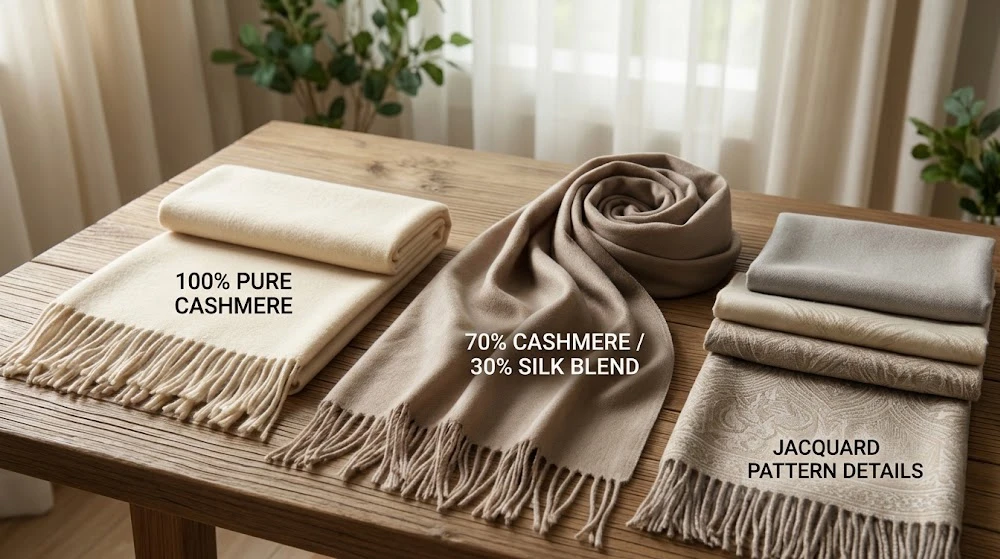
- 100% Grade A Cashmere (Pure Luxury): Fabric weights ranging from 120 to 180 grams per square meter for woven items and 150 to 220 grams per square meter for knits, delivering maximal natural softness for flagship retail lines and luxury corporate gifts.
- 70% Cashmere / 30% Mulberry Silk (Luster and Drape): Blending Grade A cashmere with high-grade Mulberry silk reduces finished fabric weight to 100–140 grams per square meter while imparting a subtle natural sheen, making it ideal for spring/summer fashion collections and vibrant jewel-tone colorways.
- Cashmere-Merino Blends (50/50 or 70/30): Combining 14.5–15.5 micron cashmere with fine 17.5-micron Merino wool increases structural durability and anti-pilling performance while reducing yarn raw material costs by 40% to 55% compared to pure cashmere.
- Jacquard, Plain Weave, and Flat Knitting Options: Woven flat-loom constructions (120–200 g/m²) provide smooth classic backgrounds for custom Pantone dyeing (△E≤ 1.5), while electronic jacquard looms support up to 8 weft colors for detailed logo weaving. Flat knitting (7-gauge to 12-gauge in 2-ply or 3-ply structures) delivers plush winter cable and rib textures.
Working with an experienced cashmere scarf supplier to match fabric engineering with targeted consumer price points prevents over-specifying products for budget-conscious channels. Providing clear specifications for yarn ply, gauge, and fiber composition guarantees that physical pre-production samples align precisely with commercial target margins.
💡 Frequently Asked Questions
Q: What custom OEM options add the highest perceived value to a wholesale cashmere scarf?
A: Custom electronic jacquard logo weaving, proprietary Pantone yarn dyeing (△E≤ 1.5), specialized cashmere-silk or cashmere-merino blend ratios, and luxury packaging (gift boxes and custom woven labels) yield the highest retail markups.
Buyer Verification Checklist for Cashmere Sourcing
When comparing Chinese cashmere scarf manufacturers, B2B procurement teams require far more than initial product photos. Approving a custom cashmere scarf OEM project demands full transparency surrounding raw material purity, production flexibility, and export documentation before signing manufacturing contracts. Establishing a systematic verification checklist protects brand integrity and eliminates supply chain surprises.
Professional buyers should audit every prospective manufacturer against five critical operational standards:
- OEM Cashmere Scope: Confirm precise fiber declarations (100% Grade A cashmere, cashmere-silk, or cashmere-merino blends), knitting gauge (7–12 gauge), target fabric weight (100–250 g/m²), hand-feel expectations, Pantone color standards, and private label execution.
- Cost and Grade Factors: Evaluate how unit pricing scales across fiber grades, yarn counts, scarf dimensions, woven vs. knitted constructions, custom brushed finishing, retail packaging, and batch size requirements.
- Proof of Manufacturer Capability: Request clear sample timelines (10–15 days), verify lab dip spectrophotometer color matching (△E≤ 1.5), evaluate custom labeling/hangtag capabilities, and inspect bulk packaging options.
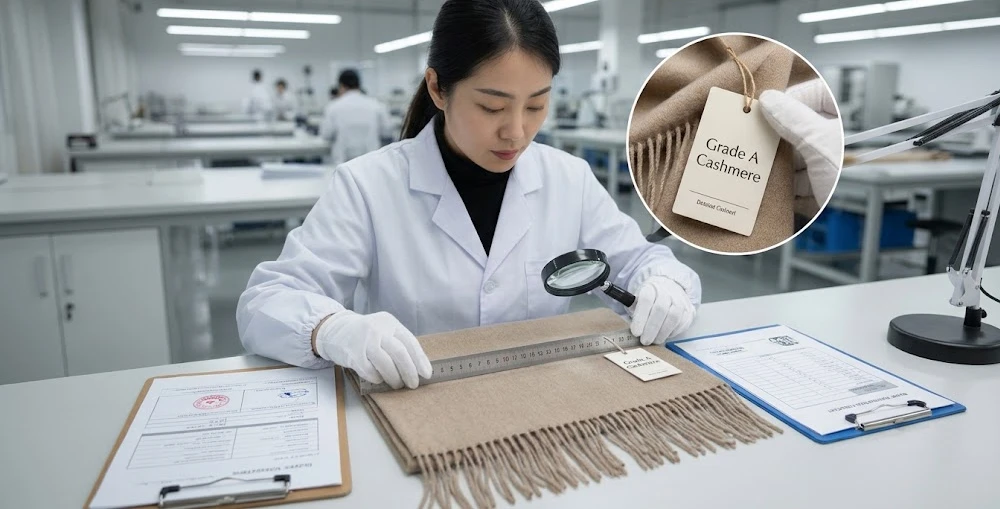
- Documented Quality Certifications: Audit essential export documentation including IWTO-12 fiber diameter reports, SEM composition certificates, OEKO-TEX Standard 100 compliance, and ISO 12945-2 Martindale pilling test reports (≥Grade 3).
- Pre-Shipment Inspection Protocols: Ensure the factory supports transparent final inspection procedures, accepting third-party audits (such as SGS or Intertek) under standard AQL 2.5 inline quality controls.
Systematically checking these documentation and operational items safeguards your brand against quality risks and customs clearance failures. Establishing clear verification requirements during the inquiry phase ensures you partner exclusively with an authentic wholesale cashmere scarf manufacturer.
💡 Frequently Asked Questions
Q: Which quality certificates should a buyer require from a cashmere scarf supplier?
A: Every shipment should include an OEKO-TEX Standard 100 certificate, an IWTO-12 fiber diameter report, an SEM fiber composition certificate, and ISO 12945-2 pilling test results to confirm consumer safety and raw material authenticity.
Structured Procurement and Risk Mitigation
Managing custom textile manufacturing requires clear communication and systematic quality checkpoints to prevent costly production errors. Cashmere accessories demand higher precision than basic winter apparel due to the high monetary value of the raw material. Establishing a structured procurement workflow prevents misunderstandings regarding fabric hand-feel, shade variations, and private label finishing.
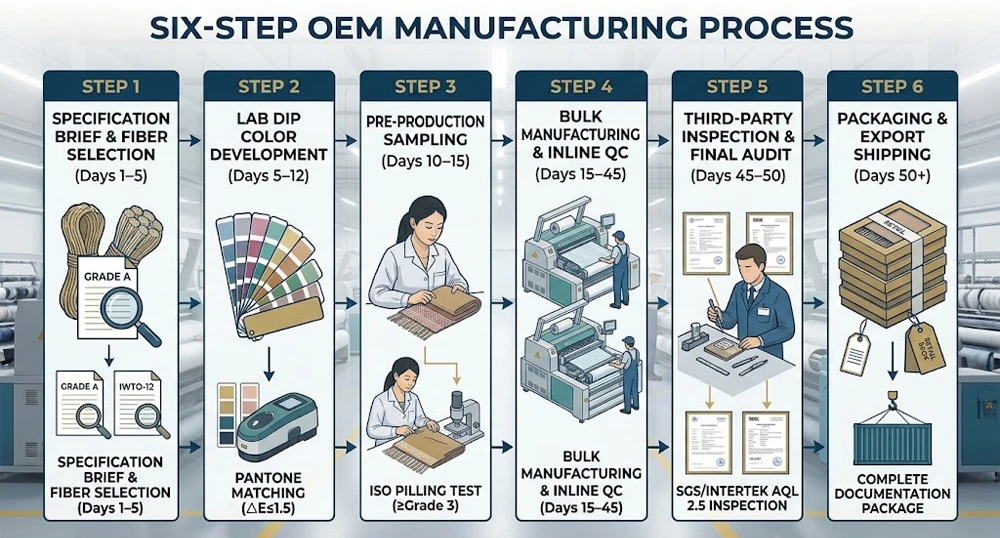
A professional six-step OEM manufacturing process minimizes supply chain risks for B2B buyers:
- Specification Brief and Fiber Selection (Days 1–5): Finalize fiber blend, scarf dimensions, fabric weight, and Pantone color references (TPX/TPG). Audit IWTO-12 raw lot reports to confirm fiber CV remains under 24%.
- Lab Dip Color Development (Days 5–12): Formulate custom dyes and verify color matching using spectrophotometer analysis, enforcing a strict tolerance of △E≤ 1.5 for solid colors and △E≤2.0 for yarn-dyed jacquards.
- Pre-Production Sampling (Days 10–15): Produce 1 to 3 physical pre-production sample scarves for physical hand-feel inspection, dimensional verification, and preliminary ISO pilling testing.
- Bulk Manufacturing and Inline QC (Days 15–45): Execute bulk weaving or knitting under strict AQL 2.5 inline inspection protocols to monitor fabric weight, tension, and finished edge treatments.
- Third-Party Inspection and Export Shipping (Days 45–50): Facilitate pre-shipment inspections by independent agencies such as SGS or Intertek, dispatches complete digital document packages prior to vessel loading.
Enforcing standardized approval milestones at each stage of production eliminates unexpected delays and quality discrepancies. Partnering with a reliable cashmere scarf supplier throughout this disciplined manufacturing procedure ensures that bulk orders match approved samples in weight, color, softness, and overall craftsmanship.
💡 Frequently Asked Questions
Q: What is the typical lead time for custom wholesale cashmere scarf manufacturing?
A: Custom sample development takes 10 to 15 working days following specification approval. Bulk manufacturing requires 35 to 50 days after pre-production sample sign-off, depending on design complexity and order volume.
Direct Factory Advantage with Jingshang
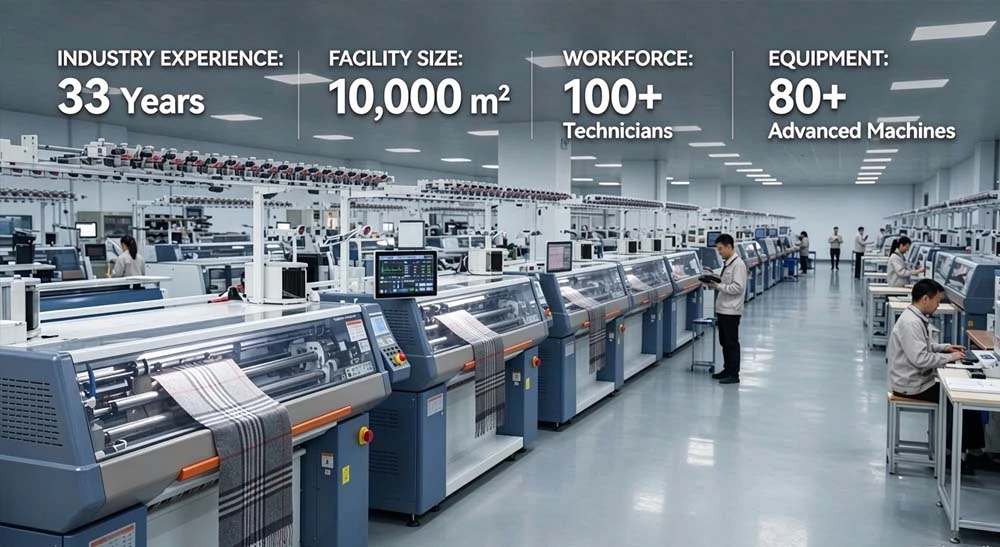
Sourcing directly from Jingshang offers fashion brands, wholesalers, and corporate buyers a decisive competitive advantage in the global market. As a premier cashmere scarf supplier with 33 years of specialized manufacturing history, Jingshang combines authentic raw material sourcing from Inner Mongolia with advanced textile engineering. By eliminating trading company intermediaries, buyers remove typical 15% to 25% agent commission markups, converting those savings directly into higher gross retail margins.
Partnering with Jingshang delivers tangible operational and manufacturing benefits:
- Integrated 10,000 m² Manufacturing Facility: Operating over 10,000 square meters of modern factory space staffed by more than 100 skilled textile technicians and equipped with 80 high-precision weaving and knitting machines.
- Accessible 500-Piece MOQs: Offering low Minimum Order Quantities of 500 pieces per style/color, enabling emerging luxury labels and growing retailers to access a premium wholesale cashmere scarf line without excess inventory risks.
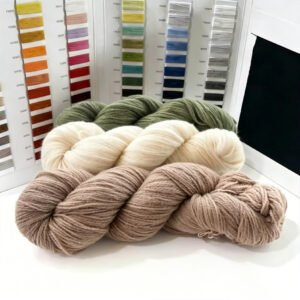
- Comprehensive Custom OEM/ODM Services: Providing tailored solutions for raw material selection (100% Grade A cashmere, silk blends, fine Merino wool blends), custom electronic jacquard logo weaving, specialized fringe finishes, and complete private label packaging.
- Rigorous Batch Document Transparency: Accompanying every production shipment with complete laboratory verification, including IWTO-12 fiber diameter reports, SEM composition certificates, ISO pilling test results, and OEKO-TEX Standard 100 documentation.
Working directly with an established factory eliminates communication barriers and provides full visibility over production schedules. Jingshang’s extensive manufacturing capacity and strict quality assurance standards empower global buyers to build resilient, high-margin cashmere accessory collections season after season.
💡 Frequently Asked Questions
Q: Why does sourcing directly from a cashmere scarf manufacturer improve profit margins?
A: Sourcing directly from a factory eliminates middleman trading fees of 15% to 25%, granting buyers direct pricing on raw Inner Mongolian cashmere. It also enables precise customization of fabric weights and yarn counts to optimize cost per unit.
Ready to elevate your winter accessory collection with verified Grade A Inner Mongolian cashmere? Jingshang provides direct-from-factory pricing, low 500-piece MOQs, comprehensive OEM customization, and full lab certifications.Contact Our Engineering Team for Free Samples!
| Inquiry Now | Email:info@hwcashmere.com | Whatsapp:+8613932982033 |
Achieving exceptional profit margins in the global accessory market requires an uncompromised product strategy centered on authentic material quality and streamlined supply chain management. Specifying verified Grade A Inner Mongolian cashmere (14.5–15.5 μm) yields superior retail pricing power, low pilling rates, and minimal customer return costs. Combining Grade A fiber quality with direct factory manufacturing allows B2B buyers to capture structural profitability for every wholesale cashmere scarf line while building long-term brand equity. Eliminating unnecessary middleman costs while enforcing batch-level laboratory testing ensures that every delivered garment reflects premium craftsmanship. Partnering with a reliable cashmere scarf supplier like Jingshang guarantees dependable production, verifiable compliance, and maximum profitability for your commercial collections.